April 2026
By: Bryan Reynolds | 29 April, 2026
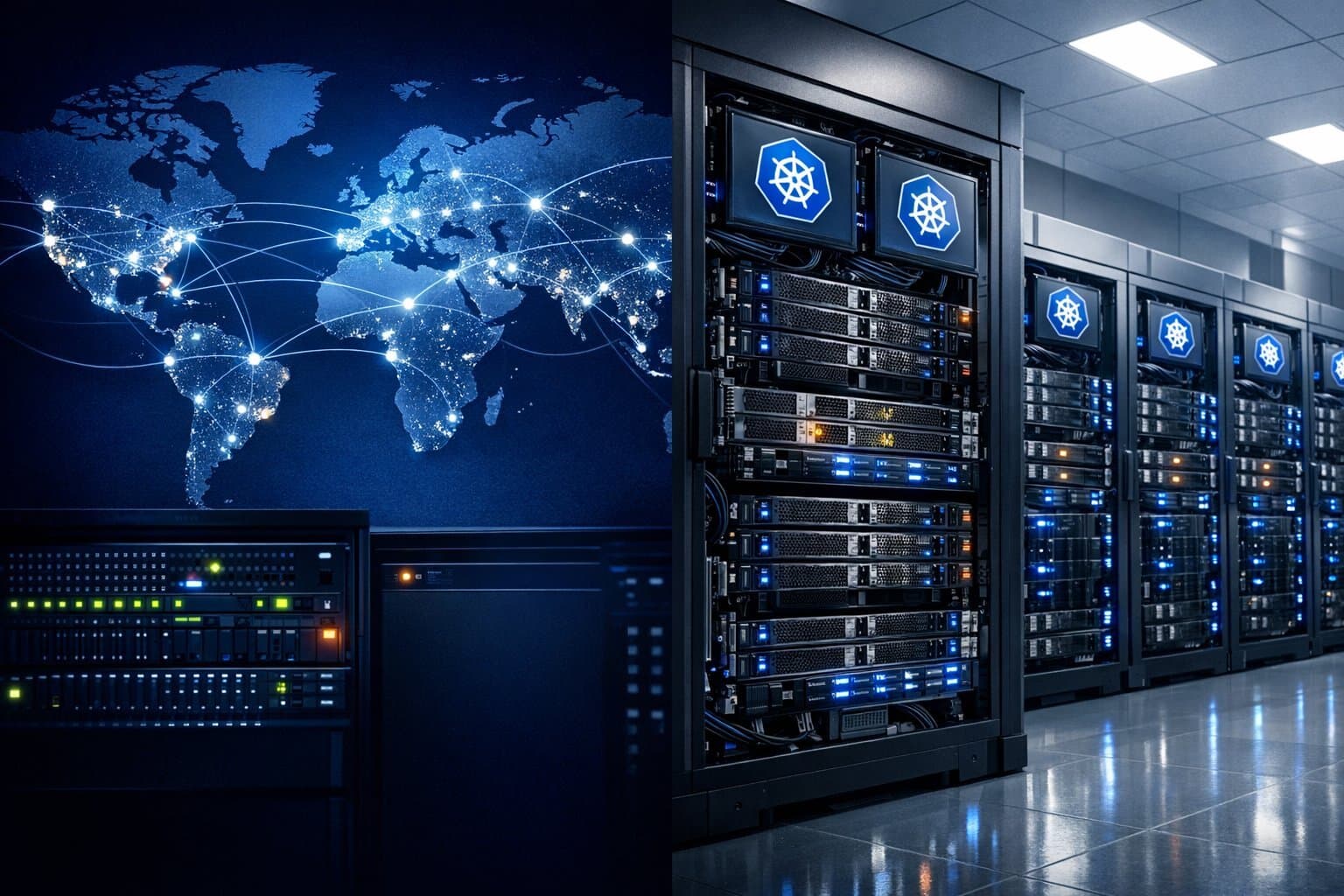
This 2026 executive guide compares edge serverless (Cloudflare Workers / Agent Cloud) and on‑prem hyper‑converged infrastructure (SUSE Harvester v1.7) for enterprise AI, evaluating latency, security, GPU management, and total cost of ownership to help technology leaders choose the right deployment for their workload, compliance, and scale requirements.
Read MoreBy: Bryan Reynolds | 27 April, 2026

This 2026 guide compares the top 10 enterprise software development companies in the USA, explains why large IT modernization projects fail, and gives CTOs a practical four-question vendor selection framework plus a side-by-side vendor comparison and company profiles to help choose the right onshore, nearshore, or hybrid partner.
Read MoreBy: Bryan Reynolds | 27 April, 2026

This 2026 research report compares Anthropic’s Claude Code and OpenAI’s Codex across architecture, benchmarks, security, token economics, on‑prem integration, and recommended enterprise deployment patterns to help CTOs and platform leaders choose the right AI engineering partner.
Read MoreBy: Bryan Reynolds | 24 April, 2026

This article compares OpenClaw (open-source, self-hosted autonomous agents) with Perplexity Computer (managed cloud-orchestrated agents) across security, total cost of ownership, deployment architecture, and multi-agent orchestration to help B2B leaders decide which approach fits their regulatory, financial, and technical needs.
Read MoreBy: Bryan Reynolds | 22 April, 2026

This article argues that in 2026 enterprises face a critical build-vs-buy AI decision: buy commodity SaaS for non-differentiating utilities but custom-build AI where proprietary workflows, data sovereignty, and competitive advantage matter, because bespoke architectures deliver better long-term TCO, security, integration, and scalable differentiation.
Read MoreBy: Bryan Reynolds | 20 April, 2026

A practical, phased 90-day enterprise AI implementation roadmap that guides mid-market firms from a rigorous data audit to a containerized pilot and finally into production, emphasizing MLOps, governance, cost transparency, and measurable ROI.
Read MoreBy: Bryan Reynolds | 17 April, 2026

This report gives CFOs a practical, finance-first methodology for proving AI and custom automation ROI, showing how to calculate payback, TCO, hours-saved value, and capital allocation to convert automation from speculative tech into a measurable profit driver.
Read MoreBy: Bryan Reynolds | 16 April, 2026

This article examines the rising threat of Shadow AI — employees’ unsanctioned use of public generative AI — quantifies its financial and operational impact using 2025 industry data, and outlines why enterprises should adopt Private Enterprise GPTs, hardened infrastructure, and governance to protect IP, comply with regulations, and enable safe AI-driven productivity.
Read MoreBy: Bryan Reynolds | 15 April, 2026

The article explains how autonomous AI agents transform field service scheduling by solving massive combinatorial optimization problems that legacy booking tools and manual dispatch cannot handle, cutting "windshield time," improving first-time fix rates, and delivering measurable ROI for B2B enterprises through scalable, cloud-native, and sovereign AI architectures.
Read MoreBy: Bryan Reynolds | 13 April, 2026

This article provides an exhaustive AI readiness checklist for CTOs and engineering leaders, outlining the strategic, technical, data, security, governance, infrastructure, and people requirements needed to move enterprise AI initiatives from pilots to production at scale in 2026.
Read MoreBy: Bryan Reynolds | 10 April, 2026

This article argues enterprise leaders must abandon effort-based vanity metrics and adopt a multi-dimensional measurement strategy—combining DORA, the SPACE framework, and Flow metrics—to accurately gauge developer productivity, manage AI-driven changes, and align engineering performance with business value.
Read MoreBy: Bryan Reynolds | 09 April, 2026

This report explains how generative AI accelerates code delivery while silently creating new forms of technical debt—cognitive, verification, architectural, infrastructure, and security—and prescribes governance, architectural patterns, CI/CD quality gates, automated AI reviewers, and test automation to prevent long-term maintainability, cost, and security failures.
Read MoreBy: Bryan Reynolds | 07 April, 2026

This report presents a practical, seven-stage approval framework for safely adopting AI-generated code in regulated enterprises by combining NIST AI RMF governance with OWASP engineering controls, automated SAST/DAST/SCA pipelines, dual-track human+AI reviews, immutable CI/CD policies, and continuous audit evidence to mitigate documented vulnerability rates and satisfy industry-specific regulators.
Read MoreBy: Bryan Reynolds | 03 April, 2026

This report explains how B2B organizations can replace brittle rule-based processes with AI-driven, agentic automation to convert repetitive administrative work into secure, scalable workflows, covering architecture, integration patterns (RAG), Human-in-the-Loop governance, target use cases, and measurable ROI.
Read MoreBy: Bryan Reynolds | 01 April, 2026

This guide explains how SaaS and internal-app teams should design, secure, and deploy true AI copilots — not bolt-on chat widgets — covering feature selection, model choice (cloud LLMs vs self-hosted SLMs), UX patterns for trust, data governance, cost trade-offs, ROI, and a practical integration process illustrated with domain examples and Baytech Consulting's approach.
Read More