The Baytech Blog, page 24
Articles 208–216 of 407, newest first. Page 24 of 46.
Every article
Search 407 articles, or browse by topic
Everything we've written since 2019, newest first. Start typing and matching articles appear as you go, or pick a topic.
Try
Articles 208–216 of 407 · page 24 of 46
 Custom Application Development
· 18 min read
IoT and Edge Computing: Unlocking Trillion-Dollar Value in the Energy Sector
This comprehensive report explores how the integration of IoT and Edge Computing is fundamentally changing profitability and operational resilience in the energy sector. It discusses the urgent financial and strategic drivers for adoption, real-world applications—from smart grids to predictive maintenance—the substantial ROI delivered by early movers, and the challenges of implementation, especially around legacy integration, cybersecurity, and workforce transformation. The article explains why a custom software development approach, rather than off-the-shelf solutions, is essential for scalable, secure, and future-proof deployments, and provides a roadmap for executives to lead their organizations into a new era of data-driven energy management.
Bryan ReynoldsRead AI Adoption & Strategy
· 13 min read
How Grok Code Fast 1 Is Changing AI-Powered Software Development
The article examines the launch of xAI's Grok Code Fast 1, a disruptive new AI-powered coding assistant designed to accelerate software development with unmatched speed, scale, and cost-efficiency. It outlines the model's technical advantages—such as its Mixture-of-Experts architecture, vast context window, and transparent reasoning features—while providing a business-centric analysis of its competitive positioning against leading models from OpenAI, Anthropic, and Google. The piece offers actionable guidance for technology leaders on integrating Grok Code Fast 1 into development workflows, emphasizing intelligent, portfolio-based AI adoption strategies to maximize productivity, save costs, and foster innovation without replacing human talent.
Bryan ReynoldsRead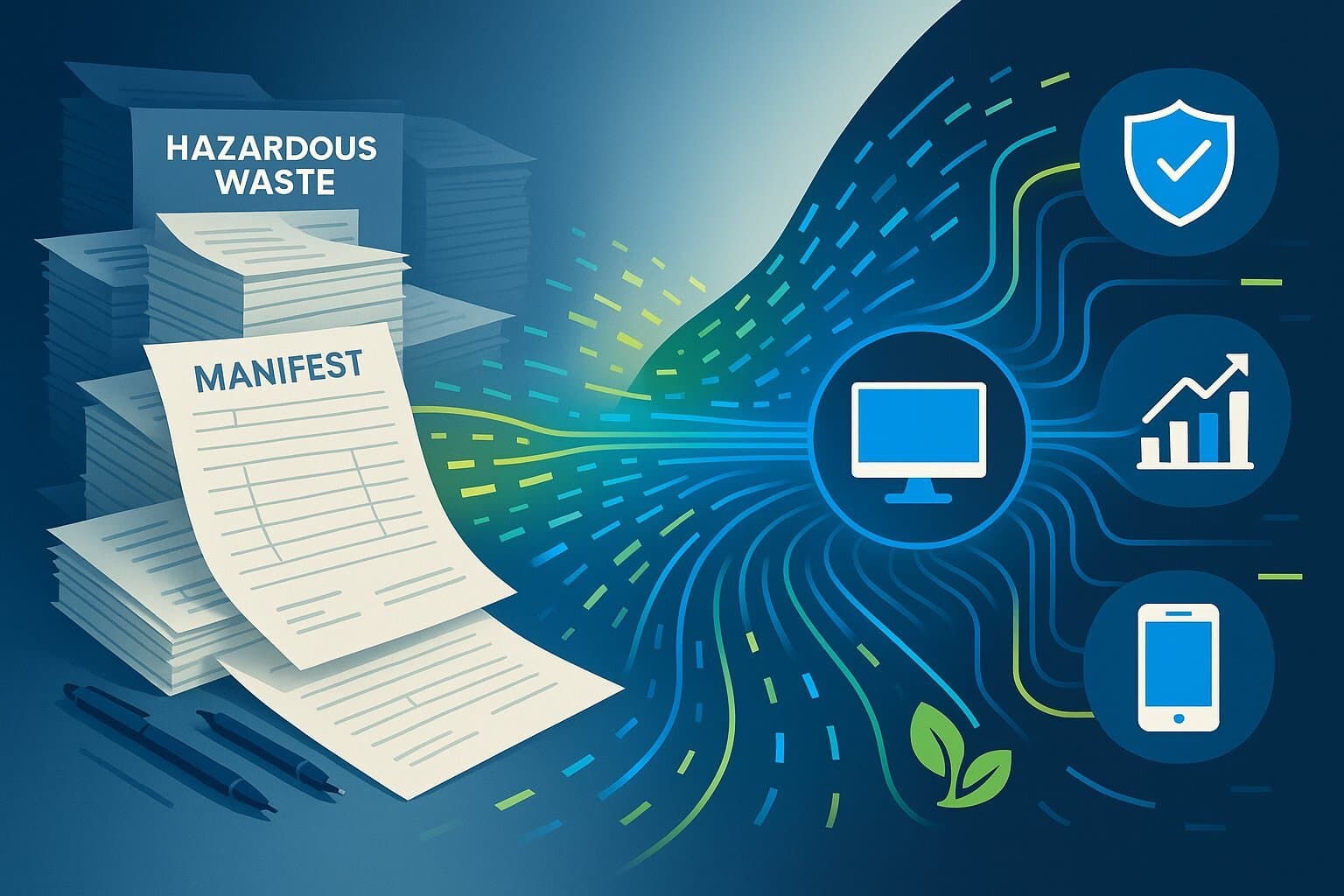 Custom Application Development
· 13 min read
Digital Transformation in Hazardous Waste Management: Compliance, Strategy & ROI
This article explores the transformative shift in hazardous waste management driven by tightening global regulations, expanding corporate liabilities, and the rise of digital technologies. It details critical regulatory changes such as the EPA's e-Manifest system, Extended Producer Responsibility (EPR), and the EU's CSRD, examining their interconnectedness and the operational risks of non-compliance. The article then outlines the necessity of a centralized digital compliance platform, field-ready mobile applications, and gamified employee training to ensure accurate data capture, operational efficiency, and organizational resilience. By quantifying potential ROI and showcasing real-world examples, the article underscores that a strategic, tech-enabled approach is now essential for both regulatory compliance and competitive advantage.
Bryan ReynoldsRead AI Adoption & Strategy
· 14 min read
How Robotics and Drones are Revolutionizing Construction: An Executive Guide
This comprehensive guide explores how construction executives can leverage robotics and drone technologies to tackle industry challenges such as labor shortages, thin margins, and rising safety requirements. The article details practical use cases for ground-based robots and aerial drones, quantifies the real-world ROI, and emphasizes the importance of an integrated software and data strategy to unlock true competitive advantage. It provides a clear road map for adoption, from piloting with drones to building a unified digital ecosystem, and illustrates how custom software—like that developed by Baytech Consulting—enables seamless integration tailored to each firm's unique needs.
Bryan ReynoldsRead Custom Application Development
· 19 min read
Virtual Care for Executives: Strategic ROI and Implementation in Healthcare
This article is a comprehensive C-suite guide to strategically integrating virtual care within healthcare organizations. It explores the explosive growth and permanent market shift toward digital health, clearly defining the complex virtual care ecosystem, its modalities, and the business imperatives for adoption. The article details the triple bottom line of ROI—operational efficiency, financial performance, and superior patient outcomes—with a specific focus on value-based care. It delves into critical technology and implementation challenges such as interoperability, scalability, security, and regulatory compliance, advocating for custom-built platforms over siloed, off-the-shelf solutions. The article concludes with actionable strategies to bridge the digital divide, navigate regulatory complexity, and future-proof investments for lasting competitive advantage, especially by partnering with experts like Baytech Consulting.
Bryan ReynoldsRead Custom Application Development
· 12 min read
Transforming Construction: The Executive Blueprint for IoT Success
This article, 'The Hard Hat Revolution: An Executive's Guide to IoT in Construction,' explores how the Internet of Things (IoT) is fundamentally transforming the construction industry. It highlights IoT’s significant impact on productivity, safety, and cost control, detailing practical benefits such as predictive maintenance, asset tracking, and worker wearables. The article candidly discusses real-world adoption challenges—including integration and ROI proof—while providing actionable steps for executives to successfully implement IoT solutions on their job sites. An emphasis is placed on the need for custom software platforms that unify diverse data sources to realize the full value and scalability of connected construction operations.
Bryan ReynoldsRead Cloud Data Platforms
· 18 min read
Why Healthcare EHR Modernization Is Accelerating: The Cloud-Native Imperative
This article explores the accelerating trend among healthcare organizations to modernize Electronic Health Records (EHRs) and core systems by migrating to cloud-native platforms. Driven by post-pandemic pressures, escalating technical debt, interoperability mandates, workforce burnout, rising patient expectations, and the transformative potential of AI, over 60% of healthcare leaders are prioritizing cloud-based modernization. The article deconstructs the financial, operational, and strategic imperatives for moving beyond outdated legacy systems, details practical migration strategies, and highlights the growing role of custom integration partners in building truly interoperable, agile digital health ecosystems.
Bryan ReynoldsRead AI Adoption & Strategy
· 13 min read
ChatGPT 5: From Death Star to Easy-Bake Oven
This article investigates why public large language models (LLMs) like ChatGPT have failed to meet enterprise expectations, leading to widespread project abandonments, security incidents, and mounting hidden costs. It pinpoints three critical disconnects—accuracy, security, and specificity—that render generic tools ill-suited for business use. The article reveals the hidden operational and cultural challenges of deploying public LLMs, from unexpected expenses to organizational resistance. It then outlines a new strategic direction: shifting to custom-built, proprietary AI solutions and specialized small language models (SLMs) to achieve lasting value, data security, and competitive differentiation in enterprise settings.
Bryan ReynoldsRead AI Adoption & Strategy
· 14 min read
ChatGPT Ate My Brain: The Hidden Cost of Outsourcing Thinking
This article explores the hidden risks and strategic challenges of integrating artificial intelligence (AI) in enterprise environments, particularly focusing on the phenomenon of 'cognitive debt.' While AI is delivering documented productivity gains, emerging research—most notably from MIT Media Lab—warns that over-reliance on generative AI tools like ChatGPT may erode critical workforce skills such as creativity, problem-solving, and memory. The article outlines the mechanisms behind cognitive decline, the paradoxical effects on core business competencies, and the looming leadership gap if foundational skills are automated away. To ensure long-term resilience, it prescribes actionable strategies for instituting 'cognitive hygiene,' reimagining learning and development, and demanding human-centric technology design, ultimately making the case for intentional, human-in-the-loop AI adoption.
Bryan ReynoldsRead
Company Facts
& Figures


Our Office


Get in Touch
Software is what you depend on to get things done. Baytech is who you depend on for software.