The Baytech Blog, page 2
Articles 10–18 of 414, newest first. Page 2 of 46.
Every article
Search 414 articles, or browse by topic
Everything we've written since 2019, newest first. Start typing and matching articles appear as you go, or pick a topic.
Try
Articles 10–18 of 414 · page 2 of 46
 AI Adoption & Strategy
· 9 min read
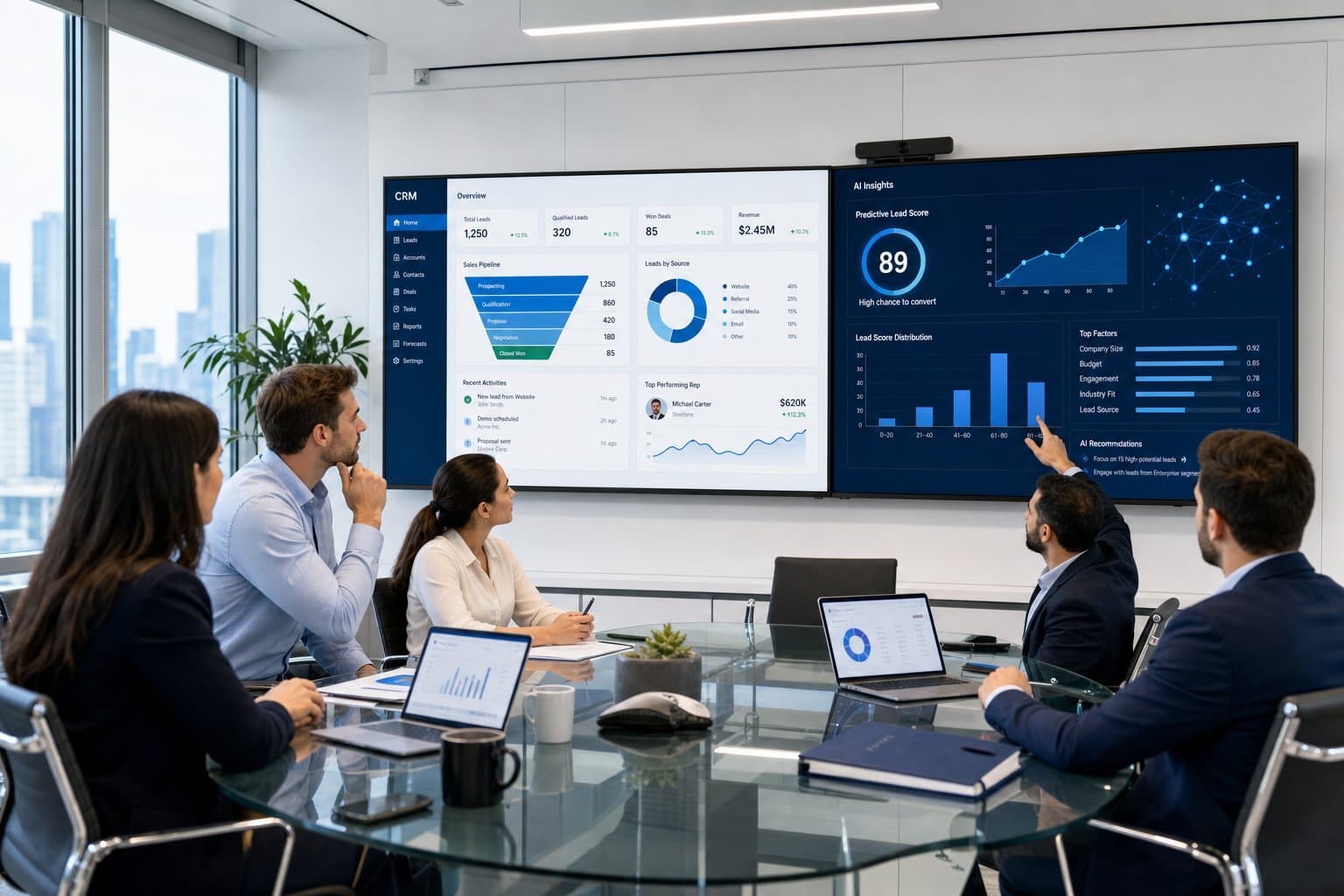
Fix the CRM First: Stop AI from Confidently Getting Sales Wrong
This article argues that AI sales tools fail when they inherit poor CRM data, and it outlines which CRM fields and defects most damage AI capabilities, how to audit data quality quickly, and a prioritized remediation approach for mid-market revenue teams to make AI-driven forecasting and scoring reliable.
Bryan ReynoldsRead Custom Application Development
· 9 min read
Don't Let the SDK Window Break Your Release
The article argues that cross-platform frameworks introduce a structural schedule dependency risk when platform vendors impose SDK floors or major OS changes, explains why framework lag occurs, classifies which apps are most exposed, and offers three strategic responses—stay, insulate, or migrate—plus practical guidance for mitigation and governance.
Bryan ReynoldsRead Custom Application Development
· 8 min read
The Internal Tool Tax: Stop Paying for Bad UX with Salaries
The article explains how poor internal-tool UX hides as payroll cost and shows how to convert workflow friction into defensible, CFO-ready dollars using loaded labor rates, low-effort diagnostics, phased redesigns, and appropriate metrics to prove ROI.
Bryan ReynoldsRead Custom Application Development
· 8 min read
From Three Weeks to Three Clicks: Stop Manual Grant Reporting
The article argues that grant reporting is a data-integration problem causing weeks of manual work for nonprofits and that a modest custom data layer—built in phases using targeted engineering, governance, and available indirect cost recovery—can automate reconciliations, preserve donor restrictions, and dramatically reduce staff time spent on funder reports.
Bryan ReynoldsRead AI Adoption & Strategy
· 9 min read
Inbox Arms Race: Why Your AI Outreach Is Getting Ghosted
The article argues that the rapid scaling of AI-driven outbound (AI SDRs) has increased message volume far faster than human attention, forcing buyer-side AI triage and reframing outbound success from copywriting to data engineering; it recommends pausing volume growth until CRM data, sender authentication, enrichment signals, and deliverability infrastructure are remediated and sequenced.
Bryan ReynoldsRead Cloud Data Platforms
· 9 min read
Dashboards Aren’t Ownership: Secure Your Reporting Pipeline
This article argues that agencies should not host a client’s reporting pipeline because dashboards are a view, not ownership; it explains the five layers of a reporting stack, the real losses when agencies retain connectors, storage, and transformation logic, contractual protections to demand, incremental migration steps, costs, and when agency-hosted reporting can be acceptable.
Bryan ReynoldsRead Custom Application Development
· 8 min read
Save the Revenue: A Practical Fix for Employer-Sponsored Training
The article argues that colleges can capture fast-growing employer-sponsored and noncredit enrollment only by addressing operational gaps in legacy SIS platforms, recommending an API-driven sidecar program-management layer to provide B2B billing, cohort workflows, identity matching, and activity-based costing so non-degree revenue can scale and be measured profitably.
Bryan ReynoldsRead AI Adoption & Strategy
· 11 min read
From Marketing Claims to Measured Outcomes: Governing Vendor ROI
This article presents a repeatable, pre-signature audit framework for validating software vendors' ROI claims by uncovering denominators, exclusions, hidden implementation costs, data prerequisites, and by designing falsifiable pilots and outcome-based contracts.
Bryan ReynoldsRead Legacy Software Modernization
· 8 min read
The Liquid Glass App Store Deadline Is Misunderstood
The article dispels a widely shared but inaccurate deadline myth about Apple’s “Liquid Glass” visual changes, clarifies that the only published App Store mandate is the iOS 26 SDK floor effective April 28, 2026, explains the temporary UIDesignRequiresCompatibility opt-out, and provides an audit checklist and phased plan to scope and execute required visual updates ahead of an expected Xcode 27 SDK enforcement in April 2027.
Bryan ReynoldsRead
Company Facts
& Figures


Our Office


Get in Touch
Software is what you depend on to get things done. Baytech is who you depend on for software.