The Baytech Blog, page 23
Articles 199–207 of 419, newest first. Page 23 of 47.
Every article
Search 419 articles, or browse by topic
Everything we've written since 2019, newest first. Start typing and matching articles appear as you go, or pick a topic.
Try
Articles 199–207 of 419 · page 23 of 47
 Custom Application Development
· 18 min read
Outsourcing Software Development? The Executive Checklist for IP Protection
This in-depth executive playbook offers a practical, step-by-step checklist for protecting intellectual property (IP) when outsourcing software development. The article guides leaders through all critical phases—pre-engagement strategy, partner due diligence, contractual frameworks, operational controls, and secure offboarding—to safeguard sensitive IP assets such as code, algorithms, and trade secrets. Covering everything from legal best practices (MSA, NDA, IP assignment) to zero-trust access models, secure SDLC, encryption, and vendor scorecards, the guide transforms IP protection from a source of risk and anxiety into a strategic advantage for innovative organizations.
Bryan ReynoldsRead Custom Application Development
· 13 min read
How to Prevent Scope Creep in Software Projects: Baytech Consulting’s Proven Strategy
This article explores Baytech Consulting's disciplined approach to preventing scope creep in custom software projects, a common but devastating risk that leads to budget overruns, missed deadlines, and decreased team morale. It details the high business cost of scope creep, clarifies the difference between scope creep, gold plating, and healthy scope change, and presents Baytech's three-pillar strategy for scope control: an airtight Statement of Work (SOW), a rigorous change control process, and radical transparency in communication. The article also debunks myths about Agile, instead positioning disciplined Agile as a core tool for scope management, and concludes with actionable checklists and questions leaders should ask development partners to ensure project predictability and success.
Bryan ReynoldsRead Cloud Cost Management
· 15 min read
SaaS Scalability Strategies: Executive Guide for Scaling to 1 Million+ Users
This article is a comprehensive executive guide on designing scalable applications capable of supporting 1 million users and beyond. It covers the critical architectural, organizational, and financial decisions that enable sustainable growth, focusing on business-driven priorities such as minimizing risk, optimizing cost, and aligning technical strategy with company objectives. The article examines the trade-offs between monolithic and microservices architectures, outlines foundational principles like modularity and statelessness, details database and cloud infrastructure best practices, and provides actionable frameworks for cost management, performance testing, and organizational alignment. Leaders are empowered with a pragmatic roadmap to avoid scalability crises and ensure readiness for rapid business growth.
Bryan ReynoldsRead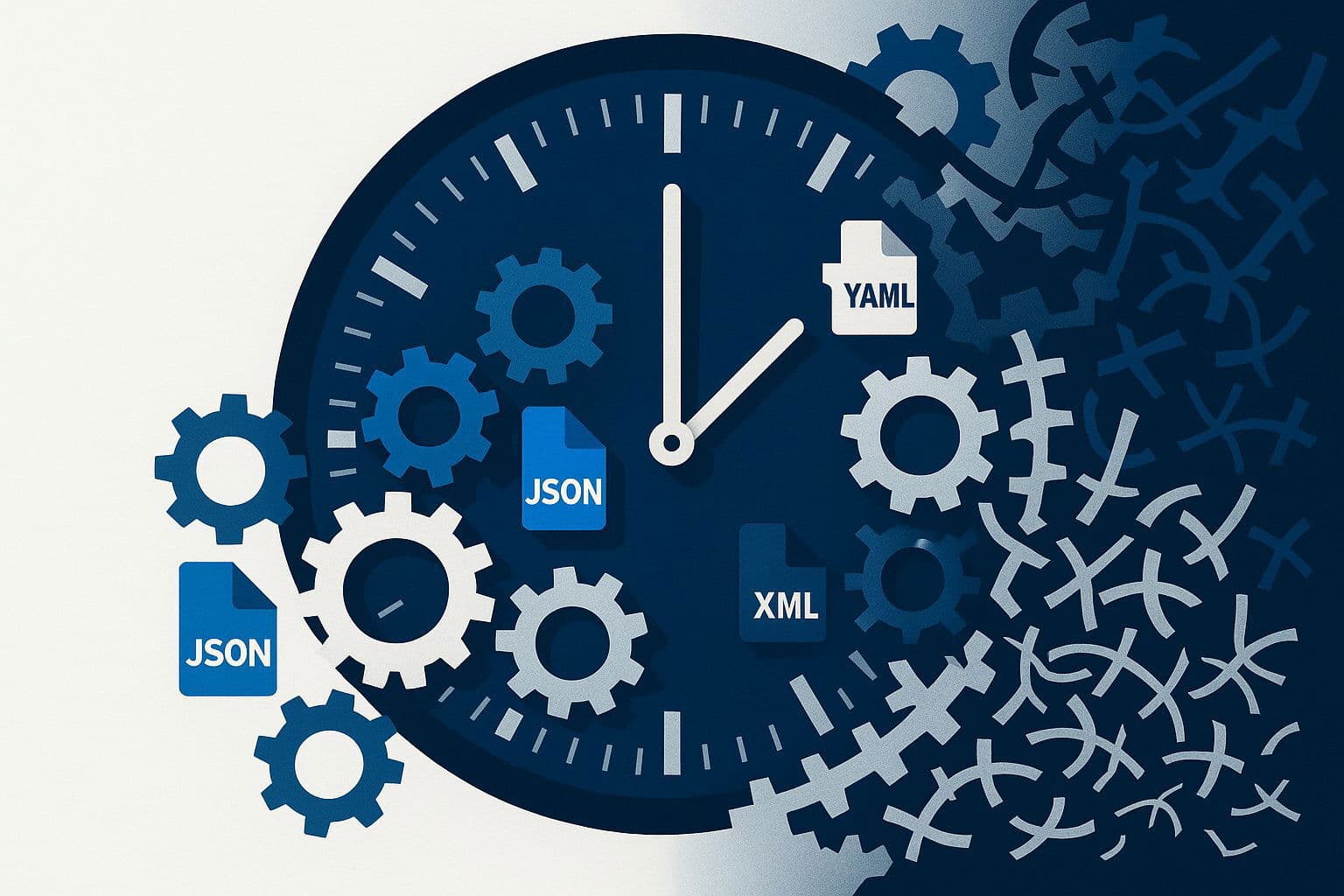 Custom Application Development
· 14 min read
The Configuration Complexity Clock: Why Too Much Flexibility Can Hurt Your Business
This article explains the 'Configuration Complexity Clock,' a model illustrating how software systems often become increasingly complex and fragile as organizations seek more flexibility through configuration. Beginning with simple hard-coded values, businesses progressively externalize configuration, advancing from basic config files to structured files, GUIs, rules engines, and even custom domain-specific languages (DSLs). While these steps are meant to empower adaptability, they actually generate technical debt, slow development, and increase operational risk. The article argues that modern DevOps practices minimize the risks that prompted excessive configuration, and offers a decision framework to help business and technology leaders strike the right balance between flexibility and maintainability.
Bryan ReynoldsRead Custom Application Development
· 18 min read
Software Maintenance Mastery: Executive Guide to Post-Launch Success
This comprehensive guide explores the critical post-launch phase of software, offering executives and product leaders a strategic framework for effective software maintenance and ongoing evolution. It covers the key challenges of the first 90 days after launch, explains the four pillars of software maintenance, demystifies the long-term financial commitment through Total Cost of Ownership (TCO), and details best practices for leveraging modern DevOps, cloud-native technology, and continuous feedback. It concludes by guiding decision-makers through choosing between in-house and outsourced management models to maximize value, innovation, and business agility.
Bryan ReynoldsRead AI Adoption & Strategy
· 39 min read
How to Budget for Custom Software in 2026: Cost Drivers, Risk, and ROI Revealed
This in-depth article provides a comprehensive financial playbook for senior leaders managing custom software development budgets heading into 2026. It analyzes key cost drivers across the software lifecycle, compares sourcing and pricing models, and outlines strategic frameworks for building resilient budgets that optimize long-term value, risk mitigation, and innovation. The report explores the dual impact of AI on project costs, the bifurcating tech talent market, growing cybersecurity and regulatory expenses, and the importance of advanced ROI metrics to justify investments to CFOs and boards. Practical checklists and templates empower organizations to shift from static project budgeting to dynamic, portfolio-based financial management, positioning custom software as a strategic growth driver.
Bryan ReynoldsRead Custom Application Development
· 12 min read
Why the Discovery Phase Saves Your Software Project (and Budget)
This article explores the critical importance of the Discovery Phase in custom software development, arguing that skipping this essential step is the most costly mistake organizations can make. Drawing on industry studies and real-world experiences, the piece details how Discovery aligns business goals, validates user needs, de-risks investments, and drastically reduces the likelihood of budget overruns and project failure. Key activities and deliverables are outlined, demonstrating how a thorough upfront investigation leads to better product-market fit, efficient use of resources, and ultimately a much higher ROI. The article concludes that investing in Discovery is not just a wise choice but a strategic imperative for any successful technology initiative.
Bryan ReynoldsRead Cybersecurity & Risk
· 13 min read
How a Single Phishing Attack Broke the Open-Source Supply Chain—and What Your Business Can Do
This article analyzes a major 2025 phishing attack that compromised popular npm open-source packages, downloaded over 2.6 billion times weekly. It details how a sophisticated phishing email targeting a trusted developer led to malicious code being published in the JavaScript ecosystem, highlighting the cascading risks businesses face from transitive software dependencies. The article frames supply chain attacks as a business-critical issue, reviews the broad operational and reputational risks exposed, and provides a practical three-tier security framework—spanning technology, process, and people—for organizations to build supply chain resilience and protect against future incidents.
Bryan ReynoldsRead AI Adoption & Strategy
· 14 min read
What is Nano Banana, and Why Should Your Business Care?
This executive guide examines Google Gemini 2.5 Flash Image—codenamed 'Nano Banana'—the groundbreaking AI image generation model reshaping the future of business visual content. Outpacing competitors like OpenAI's DALL-E 3 and Midjourney, Gemini 2.5 offers unrivaled character consistency, conversational multi-turn editing, rapid real-time image generation, and flexible integration. The article details its core capabilities, practical industry applications, competitive analysis, pricing, access methods, best prompting practices, and governance essentials, giving business leaders a strategic blueprint for leveraging this transformative tool to accelerate marketing, e-commerce, design, and innovation workflows.
Bryan ReynoldsRead
Company Facts
& Figures


Our Office


Get in Touch
Software is what you depend on to get things done. Baytech is who you depend on for software.