
In this article
- Top Strategies for Successful Software Outsourcing
- Key Takeaways
- Understanding Software Outsourcing
- Key Benefits of Software Outsourcing
- Types of Software Outsourcing Models
- The Software Outsourcing Process
- Common Myths About Software Outsourcing
- Trends Shaping Software Development Outsourcing in 2025
- How to Optimize Software Development Costs
- Evaluating Top Outsourcing Locations
- Potential Risks and How to Mitigate Them
- Choosing the Right Engagement Model
- Summary
- Frequently Asked Questions
- About Baytech
- About the Author

Top Strategies for Successful Software Outsourcing
Software outsourcing lets businesses hire external teams for software development. It reduces costs, provides access to global talent, and speeds up projects. This article will guide you through the benefits and strategies for successful software outsourcing.
Key Takeaways
- Software outsourcing enables businesses to access global talent, optimize costs, and enhance innovation by leveraging specialized expertise.
- Key benefits of outsourcing include significant cost savings, faster time-to-market, and access to a vast pool of skilled professionals across various regions.
- Effective communication, clear project objectives, and selecting the right engagement model are critical for successful software outsourcing projects.
Understanding Software Outsourcing
Software development outsourcing is the practice of hiring an external team or third-party provider for software projects. This strategic move allows businesses to optimize operations and access skilled experts globally, thereby maintaining a competitive edge in rapidly changing markets. The growing trend of remote work has further propelled the adoption of outsourcing development, enabling firms to focus on core competencies while benefiting from specialized knowledge and resources.
Accessing global talent not only helps fill skill gaps but also fosters innovation within organizations. Companies often utilize software outsourcing to efficiently scale their capabilities and tap into a wider talent pool without the need for extensive recruitment efforts.
Key Benefits of Software Outsourcing
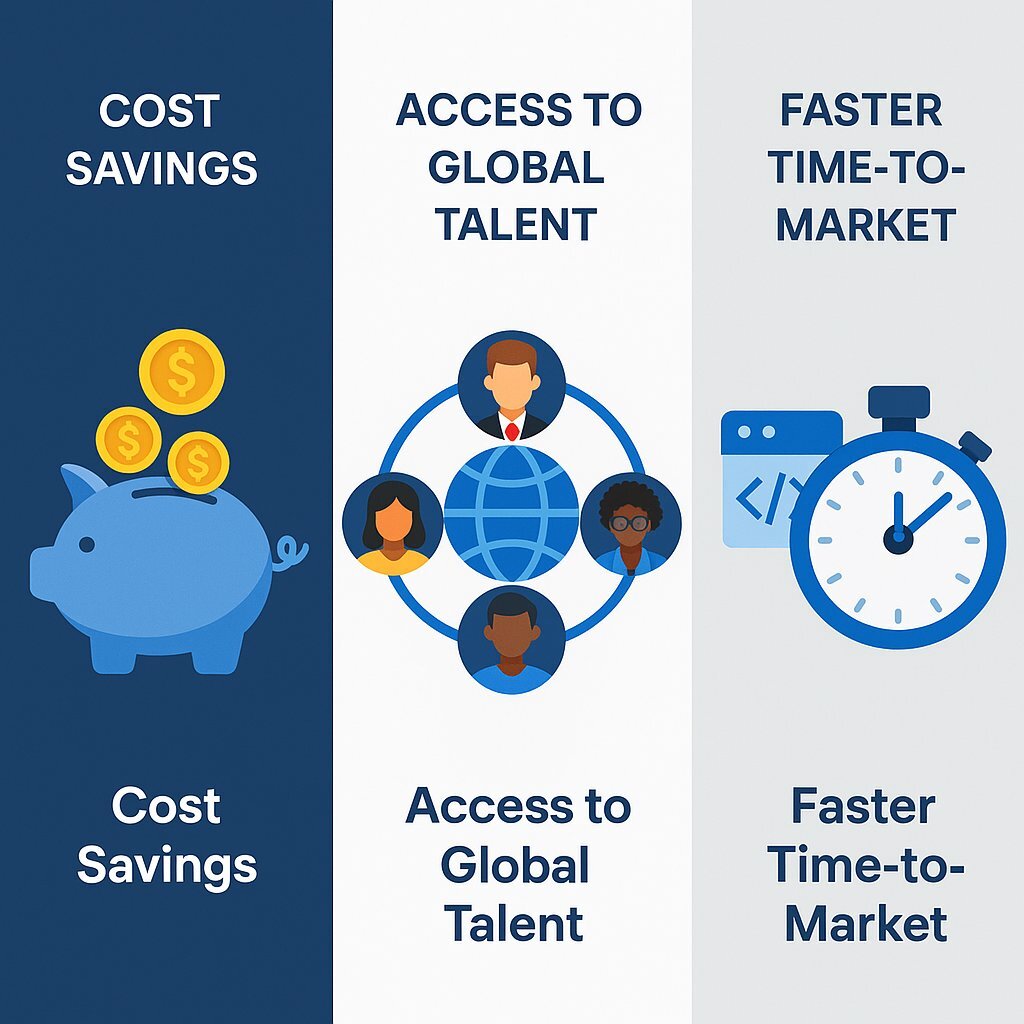
Outsourcing software development offers numerous advantages, from significant cost reductions to access to global expertise and faster time-to-market. These software solutions are pivotal in helping businesses streamline operations and focus on their core activities, ultimately leading to improved efficiency and innovation.
Let’s delve into these key benefits in more detail.
Cost Savings
One of the most compelling reasons businesses opt for outsourcing is cost savings. Outsourcing can lead to significant cost reductions, with savings typically ranging from 30% to 70% compared to in-house development. Utilizing regions with lower labor costs, such as Eastern Europe, Latin America, and Asia, allows companies to optimize spending and achieve cost efficiency. Moreover, businesses can pay only for the expertise needed, further optimizing costs.
Nearshore outsourcing offers additional advantages, such as easier communication and cost savings by working with partners in geographically closer countries.
Access to Global Expertise
Outsourcing provides unparalleled access to a global talent pool, significantly improving problem-solving and innovation. By partnering with outsourcing firms, businesses can leverage cutting-edge technology and expertise, thus enhancing project outcomes. This access to a vast pool of talent with specific skill sets allows companies to address their unique project needs without the hassle of hiring in-house.
Outsourcing services also enables the development of cutting-edge solutions without long hiring and training processes, giving companies a competitive edge.
Faster Time-to-Market
Speed is of the essence in today’s fast-paced market, and outsourcing can accelerate development cycles by providing access to experienced developers who work around the clock. This in house development team capability can significantly improve project timelines, enabling quicker product launches.
Additionally, outsourcing facilitates quicker innovation, helping companies maintain a competitive edge beyond just cost savings.
Types of Software Outsourcing Models
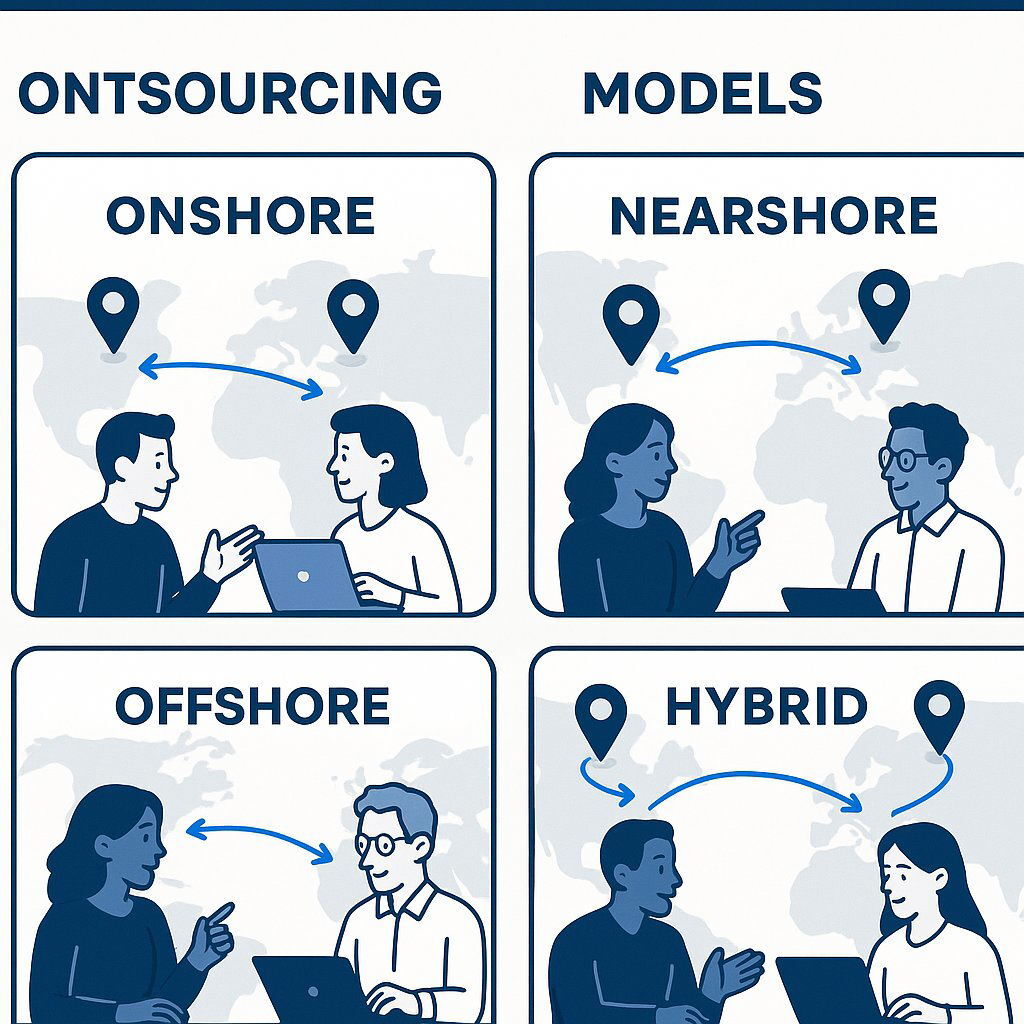
Understanding the different types of software outsourcing models is crucial in selecting the right approach for your business needs. Outsourcing can be categorized into four main types:
- Onshore
- Nearshore
- Offshore
- Hybrid models
Each offers unique benefits based on location and collaboration preferences.
Let’s explore these models in more detail.
Offshore Outsourcing
Offshore outsourcing involves hiring an external organization located in a faraway country. This often means working with companies on another continent. This model is characterized by lower labor costs and access to a vast talent pool, making it a popular choice for businesses seeking cost efficiency.
For example, India is a particularly popular outsourcing destination due to its vast talent pool and competitive pricing. Offshore teams often bring expertise in mobile app development, iOS, Android, and cross-platform development, leading to innovative app launches.
Nearshore Outsourcing
Nearshore outsourcing involves obtaining services from a company located in a nearby country. This approach allows for easier communication and collaboration. This model enhances communication and collaboration while reducing time zone discrepancies. For instance, U.S.-based companies particularly benefit from outsourcing to Mexico, which offers a convenient location and skilled software engineers.
Nearshore outsourcing allows businesses to access quality talent while enjoying cost-effective solutions.
Onshore Outsourcing
Onshore outsourcing involves hiring an outsourcing firm that is based in the same country. This type of outsourcing allows for closer collaboration and communication. This model allows for close collaboration with partners, enhancing communication and cultural compatibility.
Onshore outsourcing is ideal for projects that require frequent face-to-face meetings or a high level of cultural alignment.
The Software Outsourcing Process
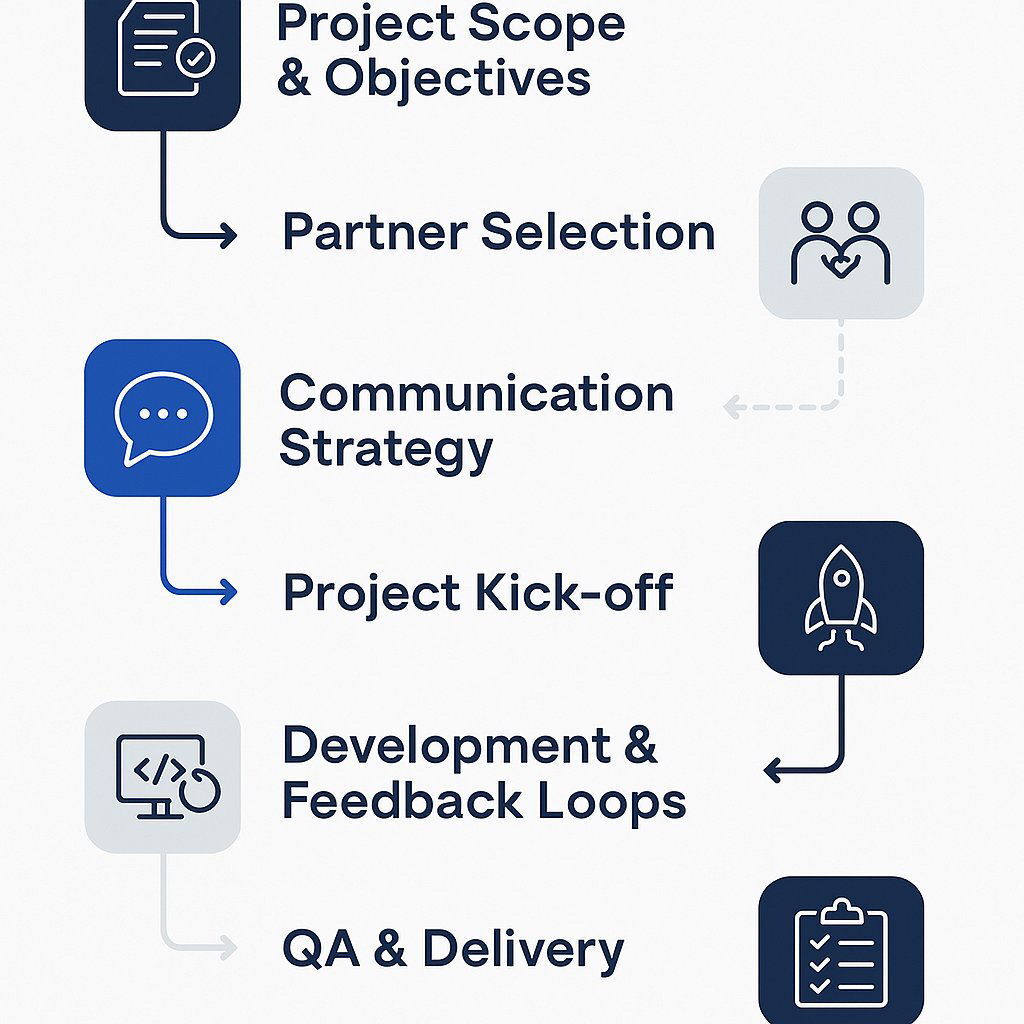
The software outsourcing process involves several critical steps that ensure the successful execution of projects. Defining clear project objectives and scope is crucial for aligning the outsourcing project with overall business goals.
Effective engagement with your outsourcing partner involves establishing open lines of communication and clearly conveying project goals and expectations. Once the strategic plan is in place, project kick-off should involve thorough discussions with the outsourcing team to ensure everyone understands the project vision and objectives.
Adopting a structured approach with well-defined steps can significantly enhance the project execution process in software outsourcing.
Defining Project Scope
Clear project objectives are essential for aligning the outsourcing project with overall business goals. Specific and measurable project objectives not only ensure alignment with business goals but also facilitate effective progress tracking.
A comprehensive scope statement outlines objectives, deliverables, and constraints, serving as the project’s roadmap. Clear project requirements help prevent cost overruns, avoiding costly adjustments during development, especially when considering project complexity.
Selecting the Right Outsourcing Partner
When choosing a software outsourcing company, evaluate their alignment with your project goals, timelines, and quality standards. Researching software outsourcing companies is crucial; it helps in finding a suitable long-term partner which can significantly influence your business.
Consider expertise, industry experience, the range of services, quality, reputation, and proven processes when evaluating prospective companies. Assess credibility by reviewing company websites, case studies, third-party reviews, and social media feedback.
Managing the Development Process
Effective communication is crucial in outsourcing as it enables efficient project progress and timely launches. Communication tools like Zoom and Slack foster effective collaboration and keep stakeholders connected. Consistent communication fosters collaboration and helps address issues promptly, preventing potential project delays.
Frequent updates and feedback loops between the development team can significantly reduce misunderstandings and streamline project workflows.
Common Myths About Software Outsourcing
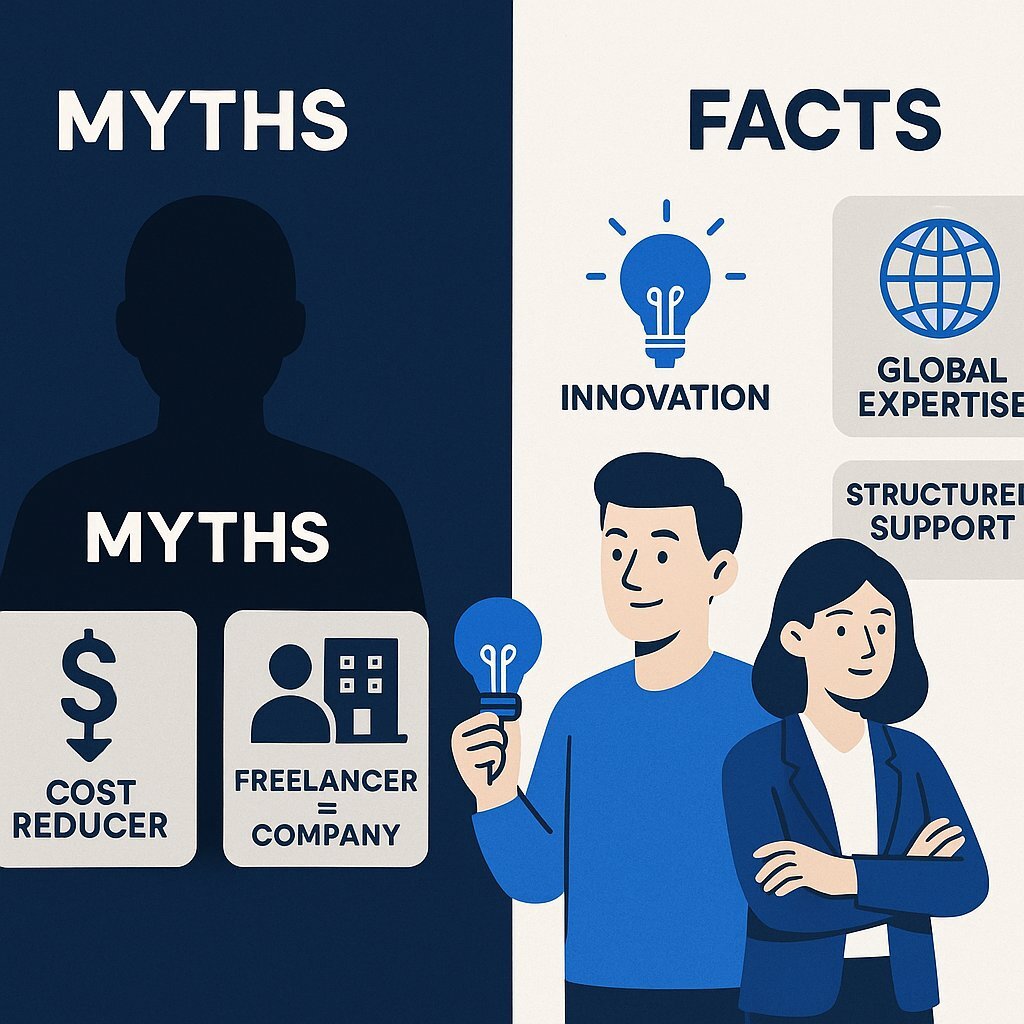
Many businesses hold misconceptions about software outsourcing that prevent them from considering this viable option. Understanding the true nature of software outsourcing can help businesses leverage its full potential, improving their competitive edge.
Let’s debunk some common myths and misconceptions to provide a clearer picture.
"Outsourcing Only Reduces Costs"
It’s a common myth that outsourcing is merely a cost-reduction strategy. While it effectively reduces various costs, including those related to recruiting, insurance, training, and office supplies, the primary advantage lies in accessing specialized skills and expertise, fostering innovation, and gaining a competitive edge.
"Freelancers Offer the Same Benefits"
Another misconception is that hiring freelancers offers the same benefits as partnering with dedicated outsourcing companies. While freelancers provide flexibility and can be hired for specific projects, dedicated outsourcing companies offer more robust support and structured resources, ensuring better project management and higher quality solutions.
Trends Shaping Software Development Outsourcing in 2025
By 2025, the trend of outsourcing software development is expected to grow, providing increasing benefits to businesses. Technology has enhanced collaboration and productivity in the software engineering and software development outsourcing market, driven by skilled software developers and cloud computing, as well as ongoing development efforts from software development companies. Additionally, software development outsourcing trends indicate a shift towards more flexible and innovative solutions.
Remote software development processes are being transformed by new technologies and methodologies, making the outsourcing landscape more dynamic and efficient. Staying abreast of these trends is crucial for businesses looking to leverage digital transformation effectively.
How to Optimize Software Development Costs
Optimizing software development costs is paramount for businesses to achieve cost efficiency and maximize value while managing operational costs and enhancing operational efficiency. Outsourcing provides access to talent across different time zones for round-the-clock development. To optimize costs, optimizing testing efforts can also reduce overall project costs.
The follow-the-sun model increases responsiveness and reduces delays in software development outsourcing.
Clear Objectives and Milestones
Establishing specific goals and milestones helps in managing budgets effectively and tracking progress throughout the project. Detailed project milestones help in monitoring progress and managing budgets efficiently.
These clear objectives and milestones ensure that the entire project stays on track and within budget, leading to successful project completion.
Regular Communication and Feedback
Open lines of communication are crucial for the success of software outsourcing projects, facilitating collaboration and alignment between teams. Effective communication can significantly reduce misunderstandings, ensuring that both parties are on the same page regarding project expectations.
Timely feedback during development timelines is crucial to quickly address issues and keep the project on track.
Evaluating Top Outsourcing Locations
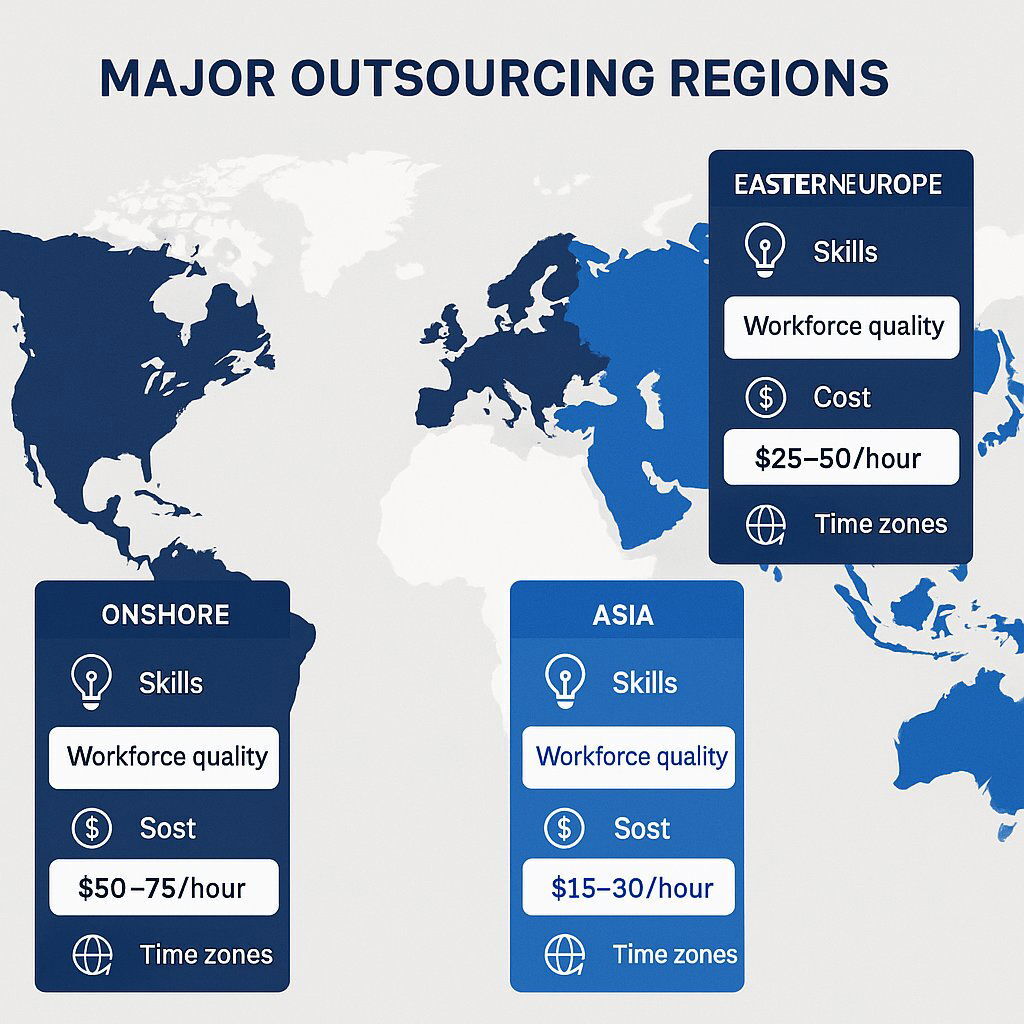
Evaluating top outsourcing locations is essential for businesses looking to leverage outsourcing effectively. Key points include:
- The average cost for onshore software development services typically starts around $60 per hour.
- Hourly rates are declining in Eastern Europe and South Asia.
- Outsourcing allows companies to access top engineers worldwide, enhancing project quality.
Let’s compare some of the top outsourcing regions.
Eastern Europe
The outsourcing market is witnessing the highest demand in Eastern Europe. This surge is attributed to the region’s competitive advantages. Ukraine, in particular, is noted for its strong technical expertise and is a prominent player in custom software development.
This region offers a blend of cost efficiency and high-quality talent.
Asia
Vietnam has emerged as a cost-effective outsourcing option, benefiting from a young, educated workforce and government support in technology. The country boasts a large pool of talented software developers, which is critical for businesses looking to outsource their projects.
Asian countries, including India, China, and the Philippines, share common characteristics that enhance their outsourcing potential.
Potential Risks and How to Mitigate Them
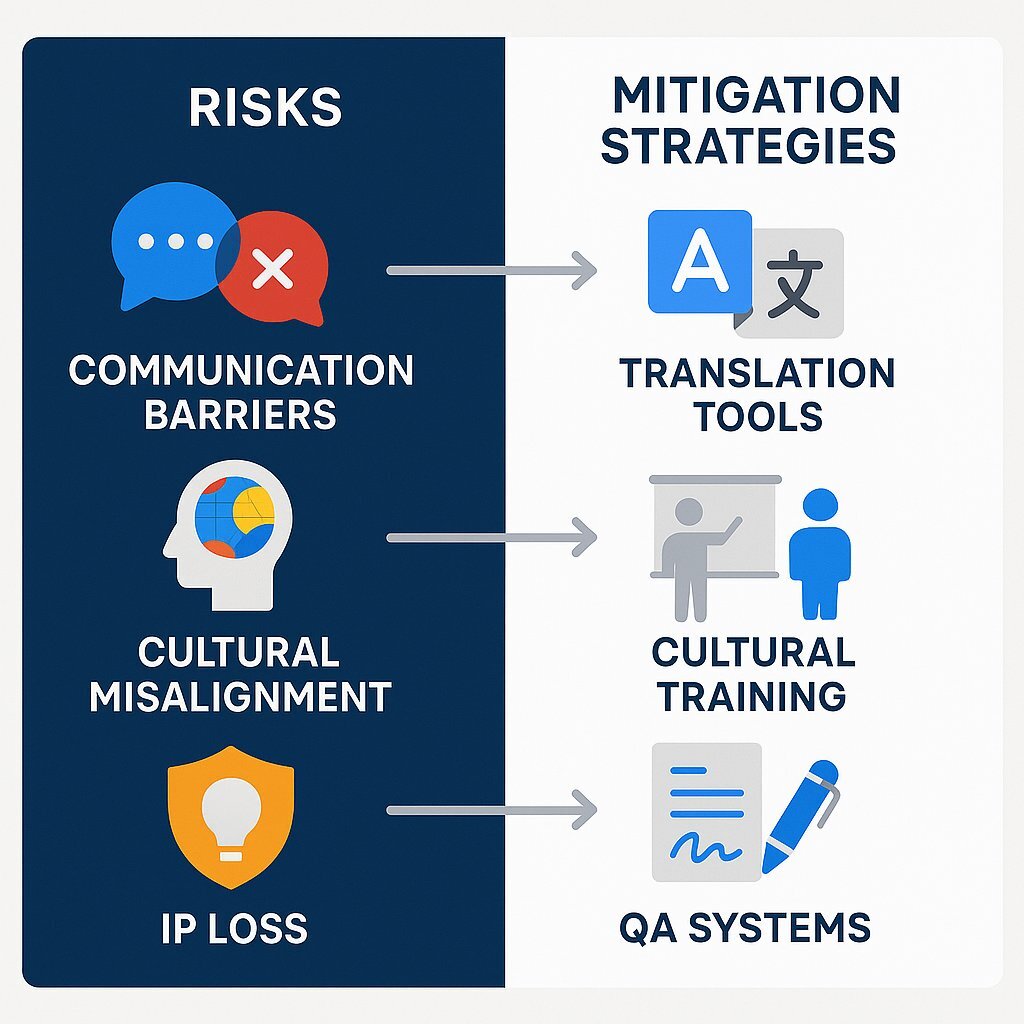
Identifying key risks is crucial as they can significantly impact project outcomes in software outsourcing. These risks include:
- Communication barriers due to time zone differences
- Cultural variances that can hinder project success
- Cultural misalignment, which is a leading cause of failure in 60% of offshore projects, emphasizing the need for cultural compatibility.
Many businesses fear that outsourcing will result in lower quality; however, partnering with reputable companies can lead to high-quality solutions in outsourced projects. Utilizing fixed-scope outsourcing model can manage project delivery risk by having clearly defined requirements and budget constraints.
Let’s explore two major risks and how to mitigate them through effective risk management.
Intellectual Property Protection
Intellectual property (IP) protection is essential in software outsourcing as it safeguards innovations and maintains a competitive edge in the market. NDAs (Non-Disclosure Agreements) protect sensitive information and ensure confidentiality with outsourcing partners.
Utilizing copyright, trademarks, and patents can provide legal deterrents against unauthorized use of intellectual property developed during an outsourcing project. Understanding the legal frameworks governing IP in both the client’s and the outsourcing partner’s jurisdiction is vital to enforce IP rights effectively.
Quality Assurance
Implementing stringent QA processes is essential to maintain high standards in software outsourcing. Neglecting quality assurance processes during outsourcing can result in delivering software that does not meet user expectations.
A bug-tracking system is crucial for maintaining software quality and effectively managing defects. Using automated testing alongside manual testing enhances software reliability. Continuous integration practices can help identify issues early in the development cycle, thus improving overall software testing quality.
These QA practices ensure that the final software product meets user expectations and maintains a high standard of quality.
Choosing the Right Engagement Model
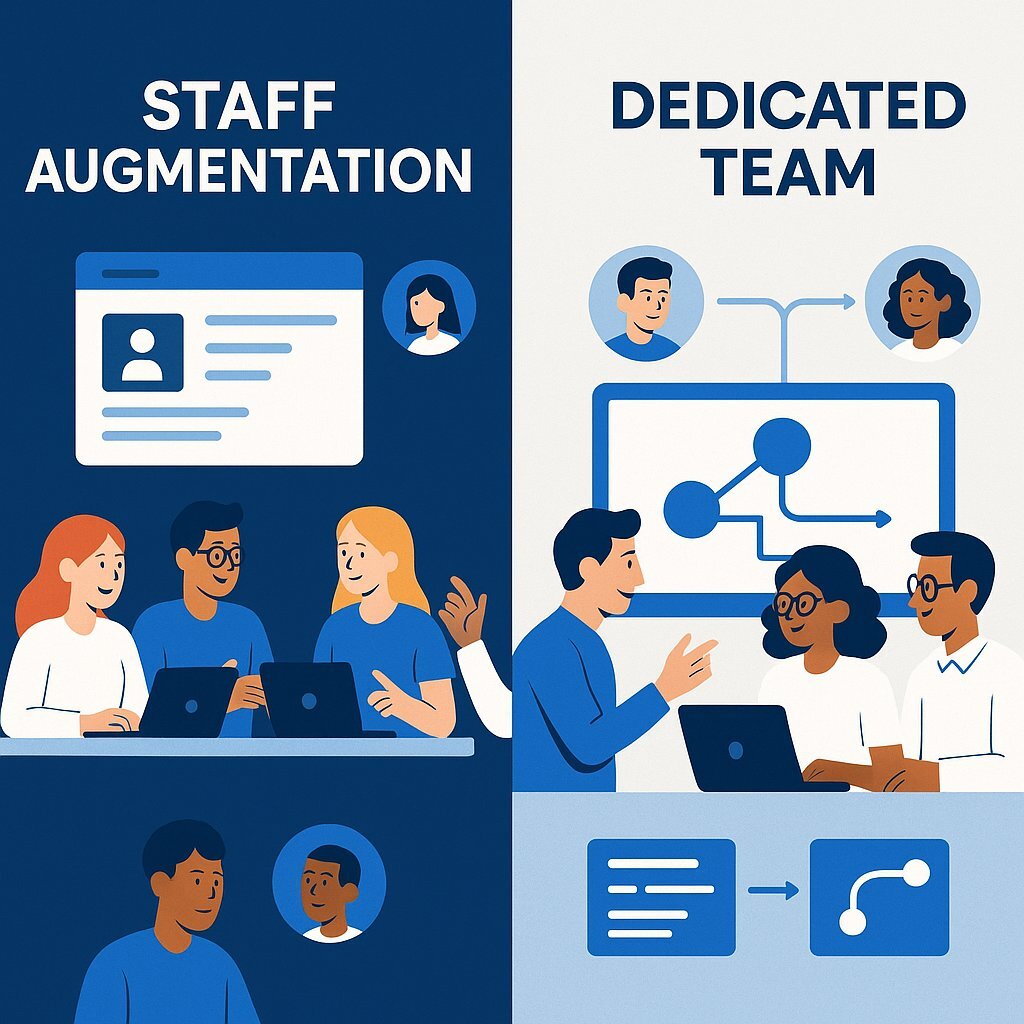
Choosing the right engagement model is crucial for the success of your outsourcing efforts. Staff Augmentation and Dedicated Teams are the two main outsourcing models for software development. These models offer different approaches to managing projects and resources. Staff Augmentation complements in-house teams for specific skill gaps or temporary capacity boosts. The Dedicated Team model provides flexibility in staffing and is ideal for evolving long-term projects.
Engagement models like time-and-material contracts and project-based outsourcing offer flexibility in team sizes and project scopes. Dedicated outsourcing companies provide more robust support and reliability compared to freelancers, ensuring better project management and higher quality solutions.
Summary
In summary, outsourcing software development offers numerous benefits, including cost savings, access to global expertise, and faster time-to-market. Understanding the various outsourcing models and processes, and selecting the right partner, are crucial for success. By staying informed about current trends and optimizing costs through clear objectives and regular communication, businesses can leverage outsourcing to maintain a competitive edge. Embrace these strategies and let software outsourcing drive your innovation and growth.
Frequently Asked Questions
What are the main benefits of outsourcing software development?
Outsourcing software development primarily offers cost savings, access to global expertise, and accelerated time-to-market. This approach enables businesses to optimize operations and concentrate on their core activities.
How do I choose the right outsourcing partner?
To choose the right outsourcing partner, evaluate their alignment with your project goals, industry experience, and reputation. It is essential to review case studies and client feedback to ensure they have proven expertise and reliable processes.
What are the different types of software outsourcing models?
The different types of software outsourcing models are onshore, nearshore, offshore, and hybrid, each providing distinct advantages depending on location and collaboration needs. Choosing the right model can significantly impact project success and team dynamics.
How can I mitigate risks associated with software outsourcing?
To mitigate risks associated with software outsourcing, ensure cultural compatibility, safeguard intellectual property through NDAs and legal frameworks, and establish stringent quality assurance processes. These steps will help protect your project's integrity and success.
What trends are shaping software development outsourcing in 2025?
In 2025, key trends shaping software development outsourcing will include enhanced collaboration and productivity fueled by new technologies, as well as the continued rise of remote development processes. These factors indicate a growing and evolving outsourcing market.
About Baytech
At Baytech Consulting, we specialize in guiding businesses through this process, helping you build scalable, efficient, and high-performing software that evolves with your needs. Our MVP first approach helps our clients minimize upfront costs and maximize ROI. Ready to take the next step in your software development journey? Contact us today to learn how we can help you achieve your goals with a phased development approach.
About the Author

Bryan Reynolds is an accomplished technology executive with more than 25 years of experience leading innovation in the software industry. As the CEO and founder of Baytech Consulting, he has built a reputation for delivering custom software solutions that help businesses streamline operations, enhance customer experiences, and drive growth.
Bryan’s expertise spans custom software development, cloud infrastructure, artificial intelligence, and strategic business consulting, making him a trusted advisor and thought leader across a wide range of industries.