In this article
- What is Adaptive Maintenance? A Strategic Guide to Future-Proofing Your Software
- Software Maintenance
- Types of Maintenance: Where Adaptive Fits In
- Beyond Bug Fixes: Where Adaptive Maintenance is on the Software Health Map
- The Tides of Change: The Triggers Forcing Your Software to Adapt
- Cloud Considerations: Adapting in a Cloud First World
- Third Party Services and Integration: Keeping Up with External Change
- The Cost of Standing Still: How Neglected Adaptations Become Technical Debt
- The Billion Dollar Risk: A Financial Breakdown of Non-Compliance
- Best Practices for Adaptive Maintenance
- From Firefighting to Future-Proofing: A Proactive Approach to Adaptive Software Maintenance
- Conclusion: Your Software’s Future is a Choice, Not a Foregone Conclusion
- Frequently Asked Question (FAQ)
- About Baytech
- About the Author
What is Adaptive Maintenance? A Strategic Guide to Future-Proofing Your Software
Your software is running great. Sales are closing, operations are smooth, and customers are happy. So why is your CTO asking for a budget to “fix” something that isn’t broken? This is a common and understandable question in boardrooms and budget meetings. The instinct is to focus resources on new features and visible innovation, not on tweaking a system that already works.
The answer lies in a critical, yet often misunderstood, discipline: adaptive maintenance. This isn’t about fixing bugs or responding to crashes. According to the Institute of Electrical and Electronics Engineers (IEEE), adaptive maintenance is the “modification of a software product performed after delivery to keep a computer program usable in a changed or changing environment”. In simple terms, it’s the work required to keep your software from becoming obsolete in a world that never stops changing.
Many business leaders apply a physical-world analogy to their digital assets. A machine on a factory floor degrades with use, needs to be repaired to fix wear and tear. Software doesn’t “wear out”. A perfectly coded application could, in theory, run forever without a single change. The problem is the digital world it lives in—the operating systems, cloud servers, third-party services, regulatory frameworks—is constantly changing. Software doesn’t degrade; its environment evolves away from it. Adaptive maintenance keeps software compliant with changing business rules and regulatory requirements, supports long-term asset health and future readiness.
Adaptive maintenance is key to staying compatible with changing business environments and extending the software’s lifespan.
This guide will turn adaptive maintenance from an IT task to a business strategy. We will explore what it is, why ignoring it is one of the biggest unmanaged risks in business today and how a proactive approach will protect your investment, mitigate catastrophic risks and give you long-term competitive advantage. Legacy systems in particular need adaptive maintenance to stay functional as new technologies and standards emerge.
Software Maintenance
Software maintenance is a fundamental part of the software development lifecycle, ensuring software systems are reliable, secure and aligned to changing business needs. As organisations increasingly rely on complex software to run operations and deliver value, maintaining these systems becomes a strategic priority. Software maintenance encompasses a range of activities including corrective maintenance to fix errors, perfective software maintenance to enhance features and preventative software maintenance to reduce future risks. Of these, adaptive software maintenance plays a key role by allowing software to keep up with changes in its environment—new operating systems, hardware upgrades or evolving software dependencies.
Regularly updating software is essential to prevent performance degradation, address emerging user demands and extend the life of your software assets. As user needs change and technology advances, software must be continuously refined to remain functional and competitive. For a deeper look at how modern approaches such as Agile methodology bolster maintenance, consider that by investing in the right type of maintenance at the right time organisations can safeguard their software systems from obsolescence and ensure they continue to deliver value throughout their lifecycle.
Types of Maintenance: Where Adaptive Fits In
Within the broader software maintenance process, adaptive software maintenance stands out as the discipline focused on ensuring software systems remain compatible with their ever-changing external environment. This includes responding to updates in operating systems, integrating with new cloud services and accommodating hardware changes. Adaptive maintenance is key to adapting software to new technologies and ensuring it continues to work in diverse software environments.
Unlike corrective maintenance which is about fixing defects and restoring functionality, adaptive maintenance is about proactively responding to external changes that could impact software performance or compliance. Perfective maintenance is driven by the desire to enhance software functionality and improve the user experience while preventative software maintenance is about anticipating and preventing future issues such as security vulnerabilities.
Understanding where adaptive maintenance fits within all the maintenance activities is key to effective software management. By recognising the unique role of adaptive maintenance organisations can ensure their software continues to meet user needs and industry standards even as the technology landscape changes.
Beyond Bug Fixes: Where Adaptive Maintenance is on the Software Health Map
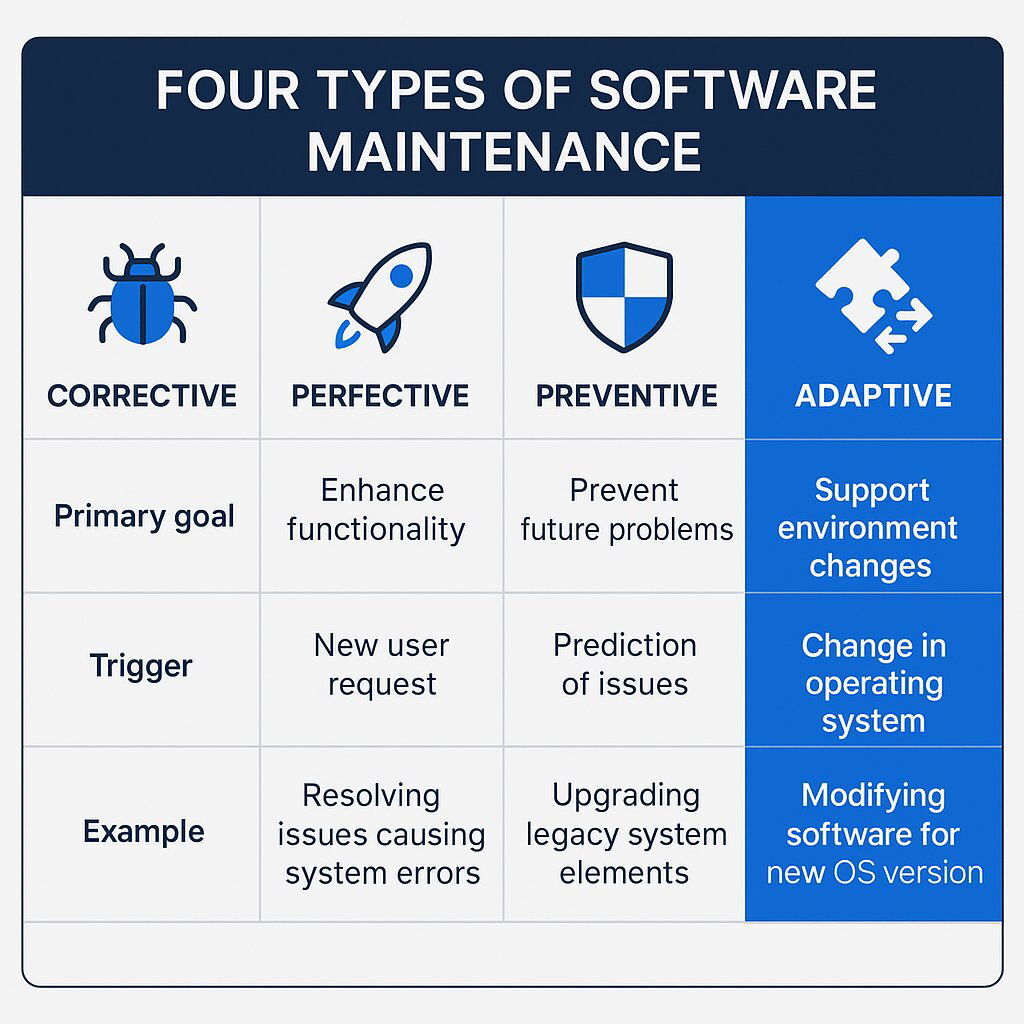
To budget for and manage the health of your software assets you need to understand that “maintenance” is not a monolith. It’s a spectrum of activities, each with a different purpose, trigger and business impact. Misunderstanding these categories leads to misallocated budgets and firefighting cultures. All maintenance activities must consider the impact on existing code to avoid introducing new issues. There are four types of software maintenance.* Corrective Maintenance : The classic “bug fix”. Corrective software maintenance involves bug fixing which addresses errors and faults reported by users or through testing. It’s a reactive process focused on diagnosing, reproducing and fixing errors to improve software stability and user trust. While essential for restoring functionality it accounts for only about 20% of all maintenance activities.
- Perfective Maintenance : The most common type of maintenance, accounting for over 50% of the effort. This is about enhancing or modifying software to meet new or changing user requirements to improve user experience. This is about performance, usability and adding new features that deliver more value to the business and its customers. This is work driven by your internal business strategy.
- Preventive Maintenance : Proactive “housekeeping” to improve the software’s future maintainability and reliability. Activities include optimising code, updating documentation and refactoring complex sections to make them easier to work with in the future. This work reduces long-term cost of ownership and prevents future problems before they occur.
- Adaptive Maintenance : The focus of this guide, adaptive maintenance is the modification of software to keep it compatible and functional as its external environment changes. This is work driven by forces outside your organisation’s control rather than simply fixing errors or bugs.
For executives having a clear mental model of these categories is the first step towards strategic oversight. Effective maintenance strategies help preserve user trust by ensuring system reliability and responsiveness. The following table provides an at-a-glance comparison to help clarify conversations between business and technology teams and justify resource allocation.
| Maintenance Type | Primary Goal | Trigger | Business Impact | Real-World Example |
|---|---|---|---|---|
| Corrective | Fix errors and bugs | User bug reports, system crashes | Reactive; restores functionality | Fixing a payment processing error that prevents customers from checking out. |
| Adaptive | Ensure compatibility | External environment changes | Proactive/Reactive; ensures continued usability & compliance | Updating an application to run smoothly on the new iOS 18 or to comply with new data privacy laws. |
| Perfective | Enhance features & performance | New user requirements, business goals | Proactive; improves value & user experience | Adding a new reporting dashboard requested by the sales team to track quarterly performance. |
| Preventive | Improve maintainability & reliability | Code complexity, potential future issues | Proactive; reduces long-term costs & risks | Refactoring a complex and difficult-to-understand module of code to make future updates faster and less risky. |

The Tides of Change: The Triggers Forcing Your Software to Adapt
Adaptive maintenance isn’t hypothetical, it’s a reality and it’s accelerating. A company no longer has control over its technology environment. The rise of cloud computing and hybrid microservices, software-as-a-service (SaaS), and API-first development has increased the number of external dependencies for any given application exponentially. The surface area for adaptive maintenance triggers is bigger and more dynamic than ever. Technologies and frequent updates require ongoing maintenance to stay compatible and performant. Adapting to new technology and new hardware is key to keeping software relevant and avoiding the costs of outdated systems. The pace of change is no longer dictated by your internal roadmap but by the collective roadmaps of all your technology partners. Here are the triggers, with software change as a response to external pressures—helping to optimise performance and extend the software’s lifespan.
Platform Evolution: The Shifting Sands of Operating Systems and Hardware
The foundation layers of technology are in constant motion. Operating systems like Windows, iOS and Android get major updates every year. Web browsers like Chrome release new versions every few weeks. The hardware in data centers is being upgraded all the time. When these platforms change, software built to run on them needs to be tested, updated and sometimes re-architected to remain compatible. Ensuring older software and legacy systems work on new hardware platforms can be a challenge, often requiring adaptive software maintenance to update code and maintain functionality. Failing to adapt can lead to performance degradation, broken features, security vulnerabilities or the application stopping to work altogether.
The API Economy: Your Dependencies Are Not Static
Modern software is rarely built from scratch. It’s assembled from a web of third-party services and Application Programming Interfaces (APIs). These can include payment gateways like Stripe, authentication services like Google Sign-In, mapping services or any number of specialized SaaS platforms. These third-party providers update their APIs to add functionality, improve security or deprecate older versions. When an API your software relies on changes, your application needs to be modified to use the new version. If you don’t adapt, the integration will break and a core part of your application will stop working.
The Regulatory Maze: Compliance as a Forcing Function
In today’s data driven world, regulatory compliance is a non-negotiable part of software development and management. New laws and standards are being introduced and updated all the time, such as GDPR in Europe, HIPAA in healthcare or PCI DSS in finance. When these regulations change software that handles sensitive data must be updated to meet the new requirements. Often changes in business rules driven by new legal norms or government policies require adaptive maintenance to ensure the software system remains compliant. This could be changing how data is stored, implementing new encryption standards or adding new user consent workflows. This type of adaptive maintenance is not optional—it’s a mandatory forcing function to continue to operate legally.
The Security War: Adapting to New Threats
The security landscape is a moving target. Adaptive maintenance is required to respond to new threats and keep the software system secure. New vulnerabilities are being discovered daily not just in your own code but in the open source libraries, frameworks and protocols your software is built upon. A critical vulnerability is discovered in a widely used component like Log4j and you need to act immediately. This is adaptive maintenance; you are adapting your software to a changed threat environment by patching, updating or replacing the vulnerable component to protect your systems and customer data. This is different from fixing a security bug in your own code (corrective) it’s about responding to external security intelligence.
Cloud Considerations: Adapting in a Cloud First World
As organisations move to cloud services to power their software applications, adaptive software maintenance must account for the dynamic nature of the cloud. Cloud providers update their services – from storage and compute to security protocols and APIs – all the time which can impact software performance and compatibility. These changes require organisations to monitor cloud service updates closely, make timely adaptive changes to ensure the software continues to work and be secure. Adapting software in the cloud is more than just technical updates; it’s about performance, data protection and service availability. By addressing compatibility issues and responding to cloud service changes organisations can minimize downtime, avoid security vulnerabilities and keep their software applications robust and reliable. For practical guidance on modern cloud maintenance and CI/CD, review how DevOps accelerates cloud release cycles. Regular adaptive maintenance in the cloud is essential for organisations to get the full benefits of cloud and control over their software’s functionality and security.
Third Party Services and Integration: Keeping Up with External Change
Integrating third party services is a common approach in modern software development to add new features and capabilities. But relying on external services adds complexity to the software maintenance process. Changes in third party APIs, updates to security protocols or modifications to service agreements can all require adaptive software maintenance to stay compatible and functional.
Managing third party services requires ongoing attention. Organisations must monitor for external changes, maintain up to date documentation of integrations and be prepared to adapt software as needed to prevent disruptions. This proactive approach minimises the risk of compatibility issues, data breaches or service outages. By staying ahead of third party changes organisations can keep their software secure, functional and aligned to business objectives as the external world changes.
The Cost of Standing Still: How Neglected Adaptations Become Technical Debt
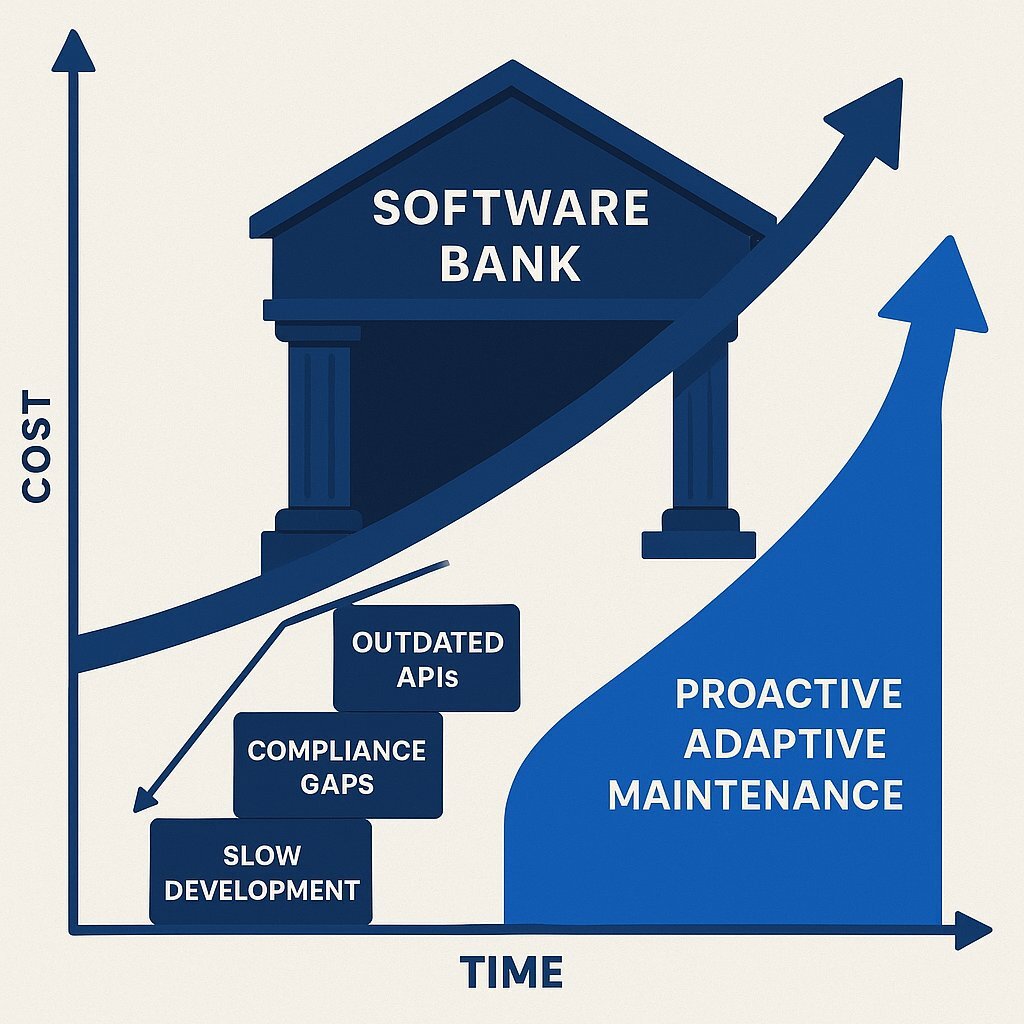
When adaptive maintenance is deferred it doesn’t go away. It accumulates as technical debt. Coined by software developer Ward Cunningham the analogy is powerful and precise: choosing a quick and easy solution or deferring necessary work is like taking on debt. You get a short term benefit – perhaps saving money on the budget this quarter or hitting a tight deadline – but you are obligated to pay that debt back later with interest.
This “interest” manifests in real business costs. Every time your developers need to add a new feature, they first have to work around the outdated platform, the deprecated API or the non compliant code. This makes development cycles longer, more expensive and more prone to errors. Over time the interest payments can consume the majority of your development team’s capacity leaving little room for innovation.
Deferred adaptive maintenance can cost the organisation dearly especially when maintaining the software system’s functionality and reliability. As the software system ages, ongoing maintenance is required to avoid these escalating costs and to keep the software system performing, stable and compliant. The business costs of unchecked technical debt in custom software are well known:
- Reduced Innovation : 69% of IT leaders say technical debt is a fundamental limit on their ability to innovate. Their teams are so busy patching and maintaining brittle, outdated systems they have no time to add new value-creating features.
- Higher Costs and Longer Time-to-Market : The interest payments on technical debt directly translate to higher development costs and longer timelines. What should be a simple feature addition becomes a complex multi-week project because of the accumulated debt.
- Poor Security and Higher Risk : Outdated libraries, unpatched platforms and unsupported software versions are a primary vector for security breaches. Each skipped adaptive maintenance task is a potential security hole waiting to be exploited.
- Lower Employee Morale : Talented engineers want to work with modern tools and solve interesting problems. Forcing them to spend their days wrestling with outdated, fragile systems is a recipe for frustration and high employee turnover.
That’s why a Tailored Tech Advantage approach is so important from day one. At Baytech Consulting we architect custom solutions with future adaptability in mind using modern tools like Kubernetes and Docker to decouple services. This architectural approach simplifies future updates, contains the impact of external changes and minimises the long term interest payments of technical debt. Deferring adaptive maintenance should be treated with the same gravity as taking on debt. It’s a strategic choice with predictable, negative consequences that compound over time and turn a manageable task into a business liability.
The Billion Dollar Risk: A Financial Breakdown of Non-Compliance
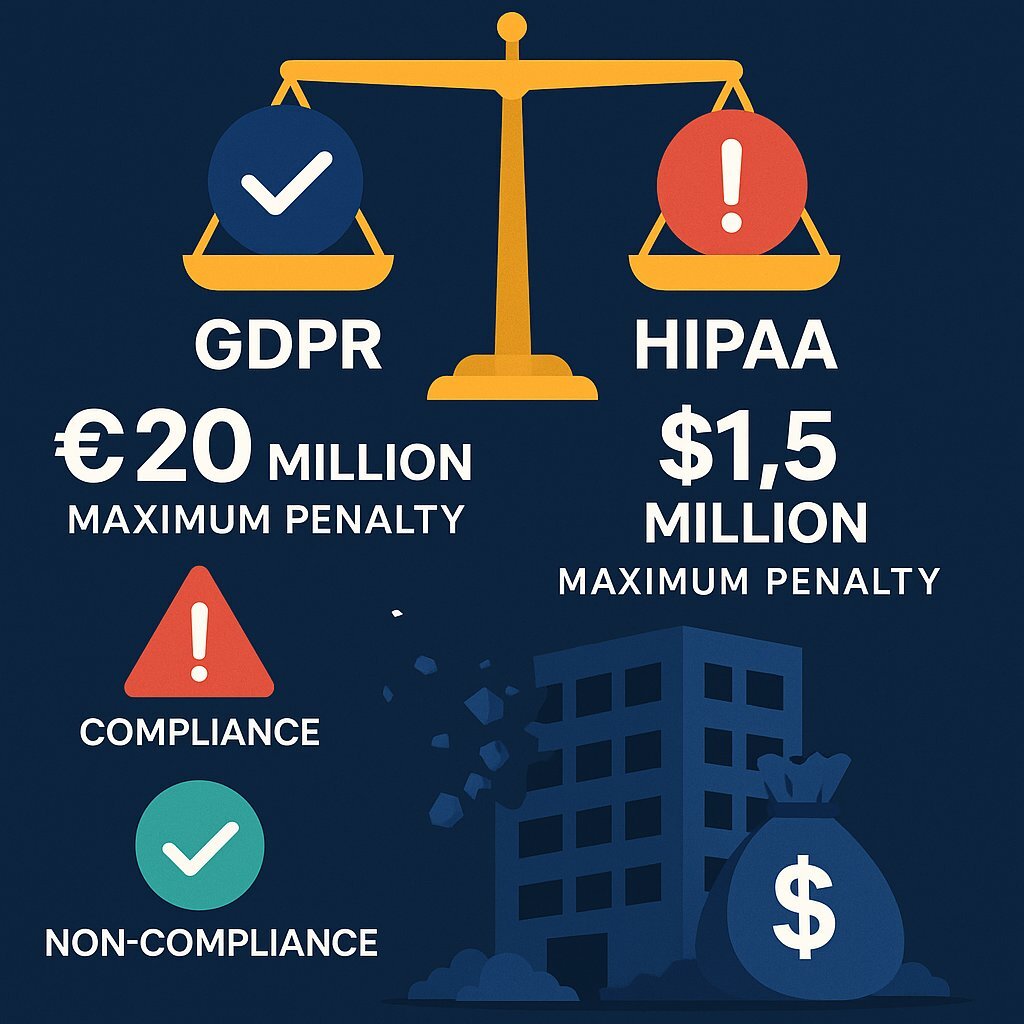
While the drag on innovation from technical debt is a big concern, the most immediate and catastrophic risk of ignoring adaptive maintenance is often from regulatory non-compliance. When laws like GDPR or HIPAA are updated adapting your software is not a choice – it’s a legal requirement. The financial penalties for non-compliance are staggering and can be existential for a business.
This is not a theoretical risk. A 2023 ruling saw Meta fined €1.2 billion for violating GDPR’s rules on data transfers. While that’s an extreme example the penalty structures for non-compliance are designed to be punitive across the board. For executives and board members, particularly the CFO, understanding these figures is crucial for assessing risk and budgeting for compliance-related adaptive maintenance. Here is the table of potential financial penalties for two of the most significant data privacy regulations affecting businesses today.
| Regulation | Penalty Tier | Maximum Fine | Real-World Example |
|---|---|---|---|
| GDPR | Tier 1 (Less Severe) | Up to €10 Million or 2% of global annual revenue | Violations related to improper data protection policies or record-keeping failures. |
| GDPR | Tier 2 (More Severe) | Up to €20 Million or 4% of global annual revenue | Violations related to illegal data processing, violating user rights, or unauthorized data transfers. |
| HIPAA | Tier 1 (Lack of Knowledge) | $71,162 per violation | An undiscovered vulnerability that the organization was not aware of and could not have reasonably known about. |
| HIPAA | Tier 2 (Reasonable Cause) | $71,162 per violation | A violation that the organization should have been aware of but was not due to willful neglect. |
| HIPAA | Tier 3 (Willful Neglect - Corrected) | $71,162 per violation | Knowingly ignoring compliance requirements but making an effort to correct the violation after being discovered. |
| HIPAA | Tier 4 (Willful Neglect - Uncorrected) | $2,134,831 per violation | Knowingly ignoring compliance requirements and making no attempt to correct the violation within 30 days. |
Beyond these direct fines the financial impact of non-compliance is even greater. A landmark study by the Ponemon Institute found the average cost of non-compliance is $15 million – nearly three times higher than the average cost of achieving and maintaining compliance ($5.5 million). This figure includes the hidden costs – business disruption (averaging over $5 million per event), reputational damage, legal fees and loss of customer trust. The ROI on proactive, compliance-driven adaptive maintenance is clear and obvious.
Best Practices for Adaptive Maintenance
To get the most out of adaptive software maintenance organisations should adopt a proactive approach that focuses on planning, monitoring and structured adaptation. Start by staying up to date with updates to operating systems, cloud services and third party integrations that could impact your software. Regularly review software performance and gather user feedback to identify areas where adapting software could add functionality or address emerging needs. For those new to the practice, see five key signs it's time to adapt or build custom solutions. Schedule regular maintenance windows and updates to minimize downtime and keep your software compatible with new technologies. Keep detailed records of all software changes and adaptations to make future maintenance easier and support knowledge transfer within your team. By embedding these best practices into your software maintenance process you’ll ensure your software continues to meet user needs, perform well and adapt to external factors – putting your organisation in a strong position for long term success in a rapidly changing digital world.
From Firefighting to Future-Proofing: A Proactive Approach to Adaptive Software Maintenance
The best way to manage the relentless pace of external change is to move from a reactive, project-based approach to a continuous, proactive process. A proactive approach involves frequent updates and ongoing maintenance to optimise performance and long-term software health. Instead of treating each new OS update or API change as a separate fire to be put out, organisations should build a strategic program for managing adaptation as an operational function. This smooths costs, reduces risk and increases business predictability.
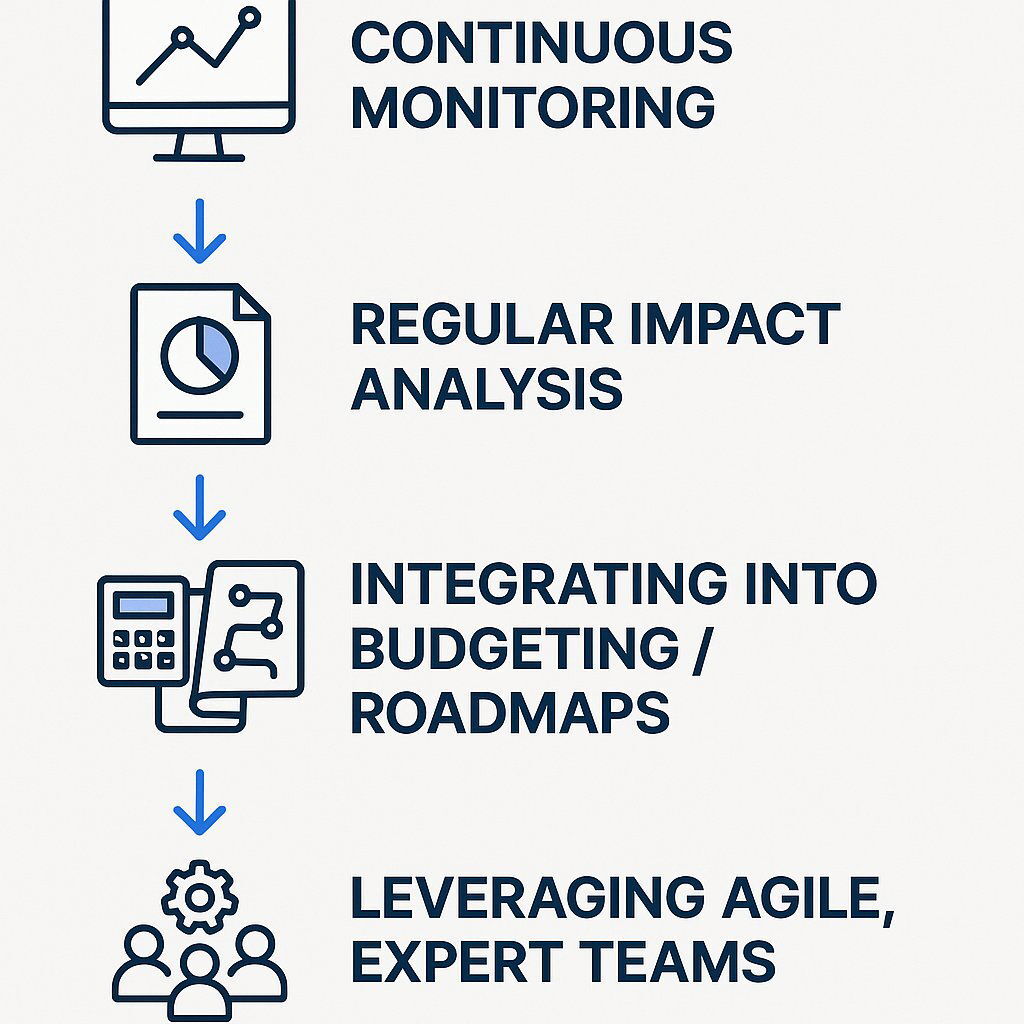
Here is a four step framework for building a proactive adaptive maintenance strategy:
- Continuous Environment Monitoring : You can’t adapt to changes you don’t see coming. This involves actively tracking the technology and regulatory environments your software depends on. This means subscribing to vendor roadmaps (e.g. Apple’s iOS release schedule), monitoring security vulnerability databases, following updates from third party API providers and staying up to date with regulatory changes in your industry.
- Regular Impact Analysis : When an external change is announced the next step is to perform a structured analysis to understand the impact on your software. Will the new browser version deprecate a feature your application uses? Does the new privacy law require changes to your data collection forms? This analysis allows you to prioritise and plan the necessary adaptive work before it becomes an emergency.
- Integrate Maintenance into Budgeting & Roadmapping : Treat adaptive maintenance as a predictable and necessary operational expense not an unforeseen crisis. A common industry rule of thumb is to budget 15-20% of the initial software development cost annually for all maintenance activities. By including a Total Cost of Ownership (TCO) model in your financial planning you can ensure resources are available to keep your digital assets current, secure and compliant.
- Use an Agile and Expert Team : The ability to respond to change is key. An agile development methodology allows for rapid, iterative updates to be deployed without derailing major, feature-focused projects. This requires a team with deep expertise not only in your application’s code but also in the broader technology ecosystem.
This is where a partner committed to Rapid Agile Deployment comes in. At Baytech Consulting, our teams of highly skilled engineers don’t just build software; we manage its entire lifecycle. We do the continuous monitoring and impact analysis so your internal teams can focus on core business innovation. We keep your application secure, compliant and fully functional on the latest platforms and turn adaptive maintenance from a risk into a managed process.
Conclusion: Your Software’s Future is a Choice, Not a Foregone Conclusion
Adaptive maintenance is not an optional IT expense to be minimised. It’s a strategic investment in business continuity, risk management and the preservation of value in your most critical digital assets. In a world of constant change standing still is functionally the same as moving backwards. The digital ground will continue to shift and applications that are not actively adapted will become obsolete, insecure or non-compliant.
By understanding the triggers, acknowledging the risks of inaction and implementing a proactive strategy business leaders can turn adaptive maintenance from a cost centre into a source of stability and competitive advantage. Proactive adaptation is the only way to ensure the software you’ve invested millions in continues to power your business’s growth and success long into the future.
Is your current software maintenance strategy really protecting your investment? If you’re spending more time reacting to problems than planning for the future it might be time for a new approach. Contact the experts at Baytech Consulting to discuss how a proactive application management strategy can future-proof your technology and help your business thrive in a changing world.
Frequently Asked Question (FAQ)
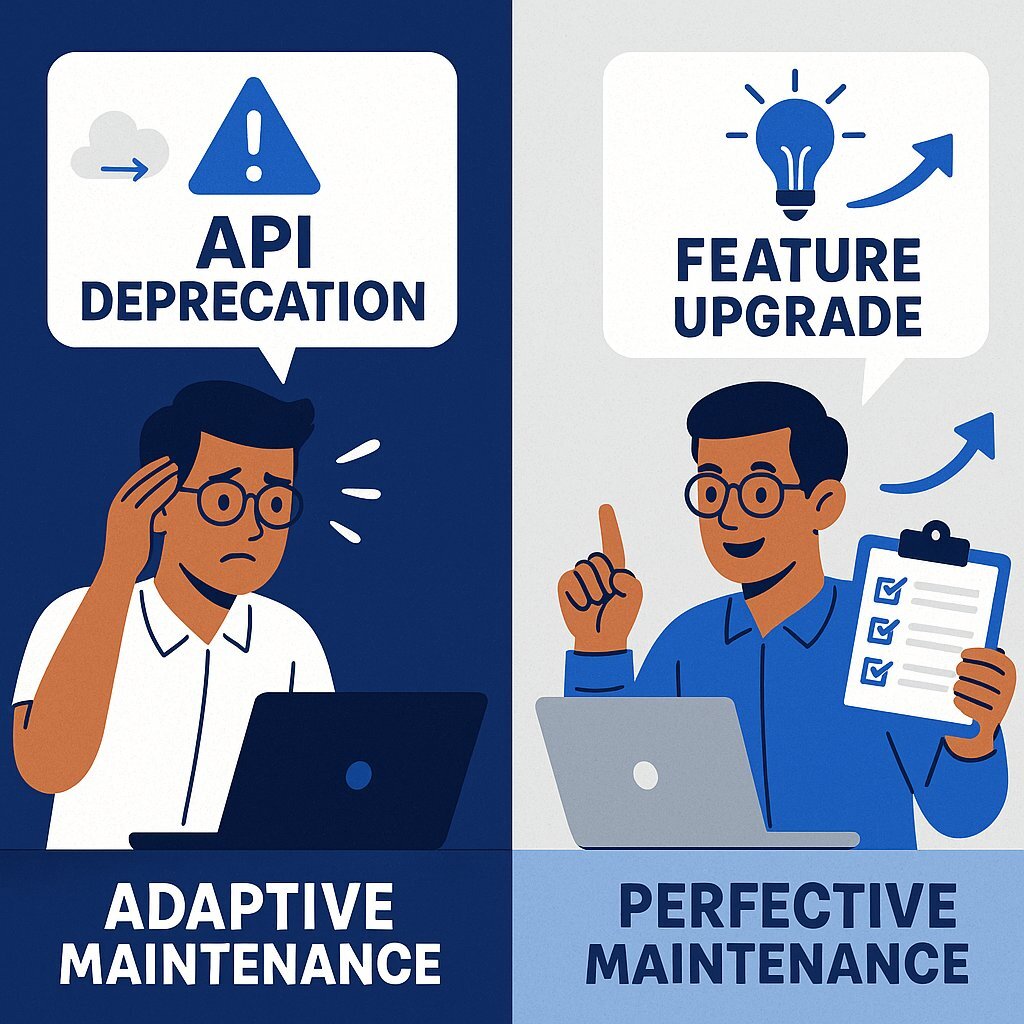
Q: How is adaptive maintenance different from perfective maintenance? They both sound like updates.
A: This is a great question as the two are often confused. The key difference lies in the driver of the change – whether it is triggered by an external force or an internal business goal. Adaptive Maintenance is externally triggered. It is reactive or proactive work done to keep the software functional and compatible with its changing environment. You are forced to make these changes to keep up with the outside world. Think of it as reinforcing your home’s foundation because of new geological survey data. You’re not adding a new room; you’re ensuring the existing structure remains sound.
- Example : Updating your e-commerce platform to support a new version of the Stripe payment API after Stripe announced the old version will be deprecated.
- Perfective Maintenance is internally triggered . It is proactive work done to enhance the software based on new business requirements or user feedback. You are choosing to make these changes to improve the software’s value. Think of it as renovating your kitchen because you want a more modern and efficient space.
- Example : Adding a “wish list” feature to your e-commerce platform because customer feedback indicates it would improve the shopping experience.
Q: How often should adaptive maintenance be done on enterprise software?
A: Adaptive maintenance should not be treated as a one-time project but as a continuous process. The frequency depends on the complexity of your software ecosystem and how frequently its external dependencies evolve. For most organisations, quarterly reviews aligned with vendor release cycles—such as cloud service updates, OS patches and API version changes—are recommended. However in fast-moving industries like finance or healthcare, monthly monitoring and incremental updates may be necessary to ensure compliance and security. The key is consistency: small, regular adaptations are far less costly and risky than large, infrequent overhauls.
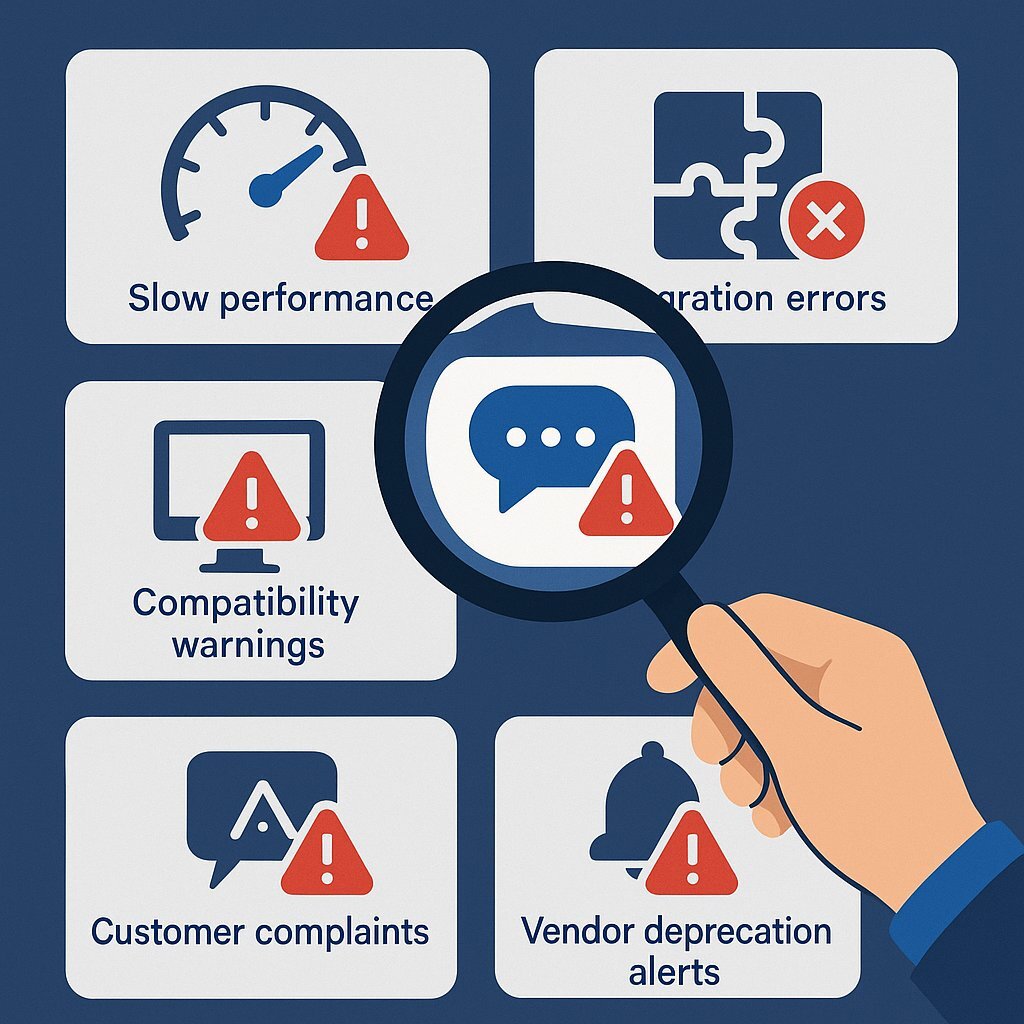
Q: What are the early warning signs that my software needs adaptive maintenance?
A: Common red flags include performance degradation, integration errors with third-party services, increasing customer complaints about functionality, or repeated compatibility issues after system updates. You might also notice slower deployment cycles as developers spend more time troubleshooting outdated dependencies. Another subtle but critical warning sign is vendor deprecation notices—when providers announce the end of support for APIs, SDKs or operating system versions your application relies on. Addressing these signals early prevents small incompatibilities from snowballing into major system failures. Explore how prototyping and validated learning can help catch these signals sooner.
Q: How can organizations budget effectively for adaptive maintenance without overspending?
A: The best practice is to include adaptive maintenance in your Total Cost of Ownership (TCO) model from the start. Industry data suggests allocating 15–20% of your software’s original development cost annually for all maintenance activities, including adaptive updates. Within that budget, prioritise based on business impact and risk exposure—compliance-driven adaptations should always take precedence. Using modular architectures and containerisation technologies like Docker or Kubernetes can also reduce long-term costs by isolating components, so updates don’t affect the entire system. Predictable budgeting and proactive planning means your organisation adapts without financial surprises.
In short, adaptive maintenance is about keeping the software usable, while perfective maintenance is about making it better.
Related Articles
- IEEE Computer Society. IEEE Standard for Software Maintenance, IEEE Std 1219-1998 .
- Ponemon Institute. The True Cost of Compliance with Data Protection Regulations .
- OutSystems. The Growing Threat of Technical Debt .
About Baytech
At Baytech Consulting, we specialize in guiding businesses through this process, helping you build scalable, efficient, and high-performing software that evolves with your needs. Our MVP first approach helps our clients minimize upfront costs and maximize ROI. Ready to take the next step in your software development journey? Contact us today to learn how we can help you achieve your goals with a phased development approach.
About the Author

Bryan Reynolds is an accomplished technology executive with more than 25 years of experience leading innovation in the software industry. As the CEO and founder of Baytech Consulting, he has built a reputation for delivering custom software solutions that help businesses streamline operations, enhance customer experiences, and drive growth.
Bryan’s expertise spans custom software development, cloud infrastructure, artificial intelligence, and strategic business consulting, making him a trusted advisor and thought leader across a wide range of industries.