
Best Software Product Development Services for Your Business Success
December 13, 2025 / Bryan Reynolds
The Executive’s Guide to Software Product Development Services: From Cost Center to Competitive Moat
In today’s digital-first economy, the gap between market leaders and their competitors is no longer defined by the size of their technology budget, but by the strategic application of their technology. After nearly two decades of analyzing corporate technology adoption, a clear pattern has emerged: companies that thrive are those that invest strategically in software solutions aligned with their unique value proposition. While generic, off-the-shelf software can create operational parity, it is custom-built software that forges a true competitive moat.
So the question for every executive is: Is your company’s software an operational commodity, available to all your competitors, or is it a strategic asset, purpose-built to amplify your unique strengths? Answering this question is key to long-term growth and market leadership.
This guide is for the B2B executive navigating this complex landscape. It will walk you through a data-driven analysis of software product development services, from the basics of the development lifecycle to the strategic math of build versus buy, and finally, to the overwhelming business case for outsource. The goal is to give you the insights to turn your company’s technology from a cost center into your most defensible competitive advantage.
What Are Software Product Development Services?
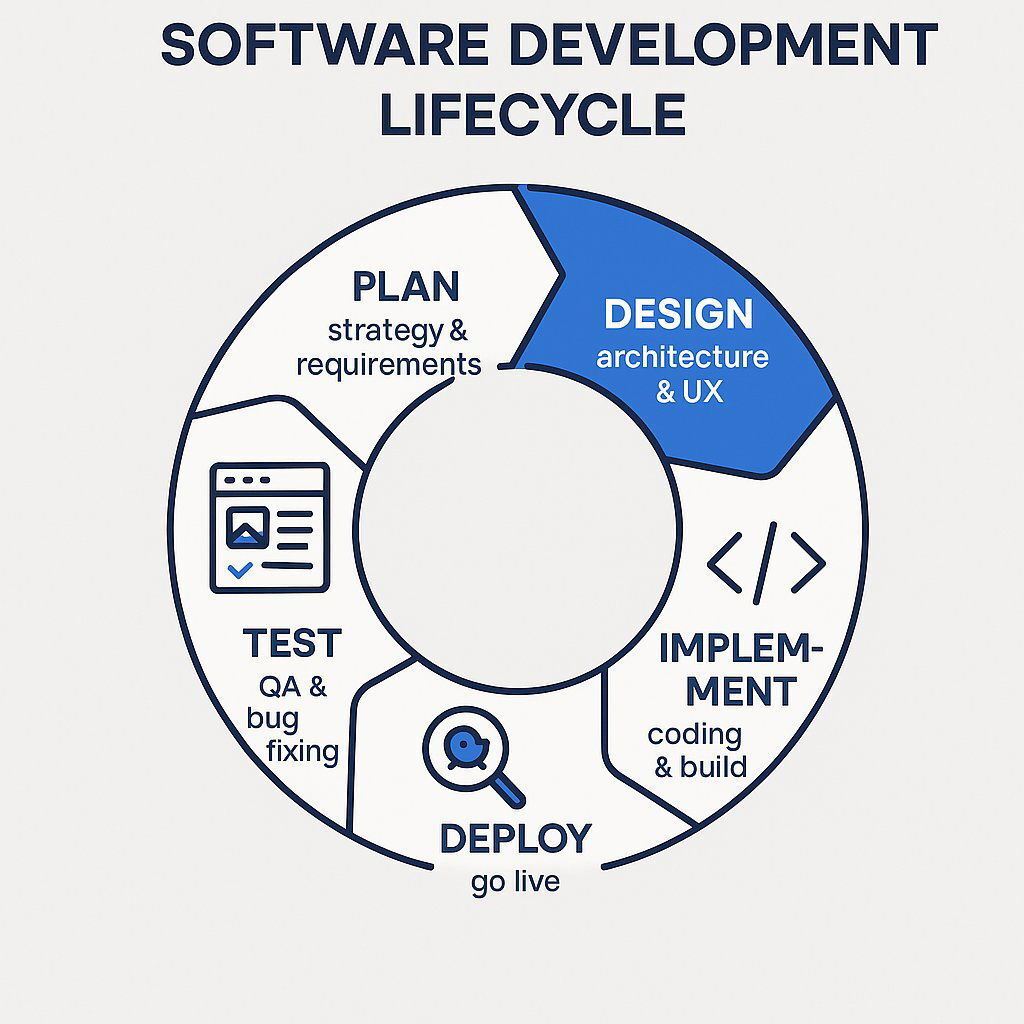
At a high level, software product development services encompass the entire process of conceiving, designing, building, deploying, and maintaining a software solution. It’s a structured business discipline, far removed from the simplistic notion of “coding.” The foundation of this discipline is a standardized framework called the Software Development Lifecycle (SDLC).
The SDLC is a cost-effective and time-efficient process that professional development teams use to design and build high-quality software while minimizing project risks through thorough planning. For an executive, understanding the SDLC is not about the technical details; it’s about recognizing it as a risk management and governance framework that protects the investment and ensures alignment with business objectives. Each phase is a critical checkpoint to validate progress, control costs, and stay focused on the end goal.
The lifecycle is typically broken down into six phases: 1. Plan: This is the strategic foundation of the project. It involves a thorough cost-benefit analysis, resource estimation and detailed scheduling. The main activity is requirement gathering where the development team works with all stakeholders – customers, internal experts and senior management – to create a software requirement specification document. This document defines the project goals, sets clear expectations and is the blueprint for all subsequent phases.
- 2. Design: In this phase, software engineers and architects take the strategic requirements from the planning phase and turn them into a technical design. This involves making critical decisions about the system architecture, choosing the technology stack (e.g. programming languages, databases), and designing the user interface (UI) and user experience (UX). The goal is to create a design that is functional, scalable, secure and can integrate seamlessly with the organization’s existing IT infrastructure.
- 3. Implement: This is the phase where the design blueprint is turned into a tangible product. The development team writes the code, building out the features and functionalities specified in the design documents. The work is broken down into smaller, manageable tasks that are completed in daily or weekly cycles to ensure steady and measurable progress.
- 4. Test: QA is not an afterthought. Throughout the implementation phase and upon completion, the software is tested rigorously to identify and eliminate bugs or defects. This involves a combination of automated testing, which can run thousands of tests quickly, and manual testing where human testers simulate real-world user scenarios. The goal is to ensure the software is not only error free but also meets every customer requirement outlined in the planning phase.
- 5. Deploy: Once the software has passed all tests it is deployed to a live “production” environment where end-users can access it. This is a managed process that involves packaging the application, configuring the production servers and installing the software. Professional teams maintain separate environments for development, testing and production to ensure ongoing work doesn’t disrupt the live service for customers. 6. Maintain: The launch of the software is the beginning not the end of its lifecycle. The maintenance phase involves ongoing support, bug fixes and updates to address customer issues and adapt to changing business needs. The team continuously monitors the software’s performance, security and user experience to identify opportunities for improvement to ensure the solution delivers value long into the future.
This structured lifecycle highlights the critical difference between buying off-the-shelf software and investing in custom development. Off-the-shelf products are generic tools built for a mass market, whereas custom software is a strategic asset, crafted through the SDLC to solve a specific company’s unique challenges and opportunities.
Why Should My Business Invest in Custom Software? The ROI of a Tailored Solution
The decision to move beyond generic, off-the-shelf software is a strategic pivot. While packaged software forces a business to adapt its unique processes to the software’s limitations, custom software is engineered to amplify a company’s distinct workflows and competitive strengths.
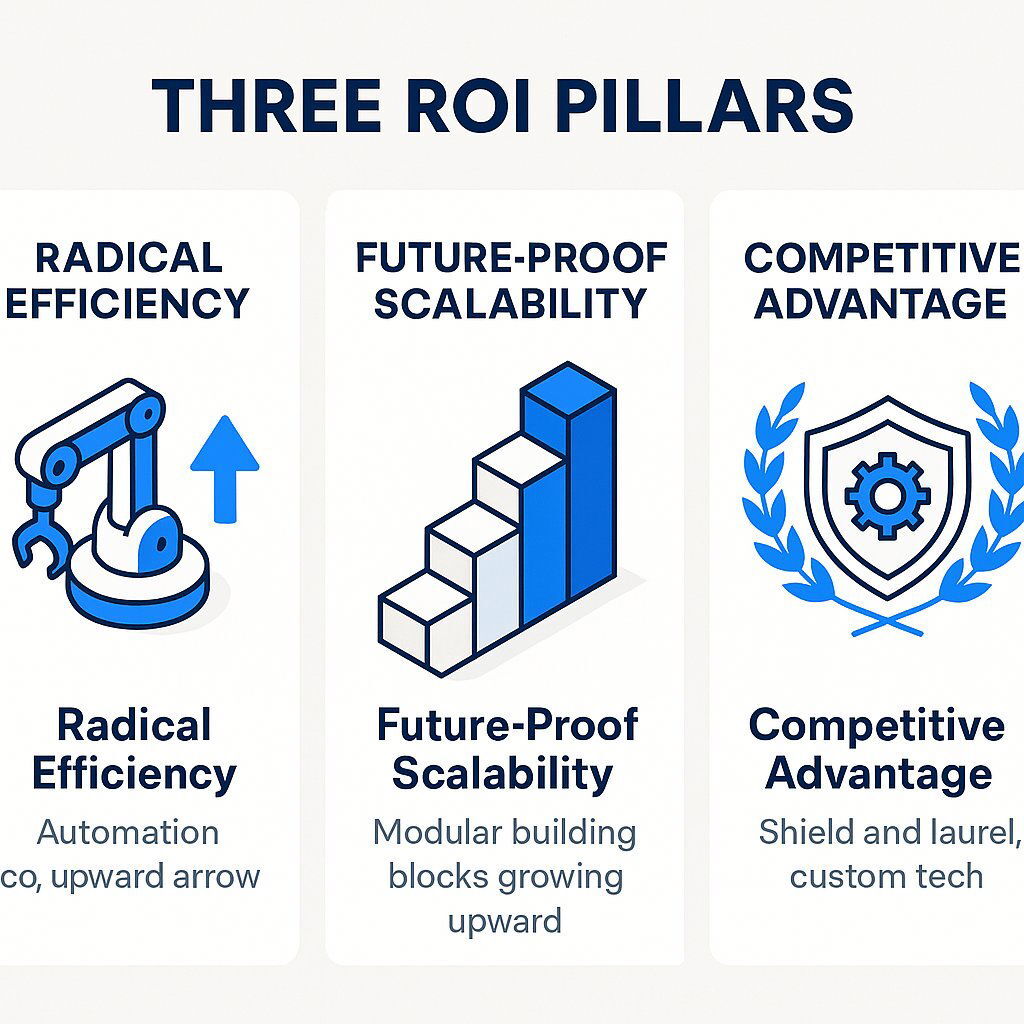
This is not an operational expense, it’s a strategic initiative that delivers a measurable return across three key pillars.
Pillar 1: Radical Efficiency and Measurable ROI
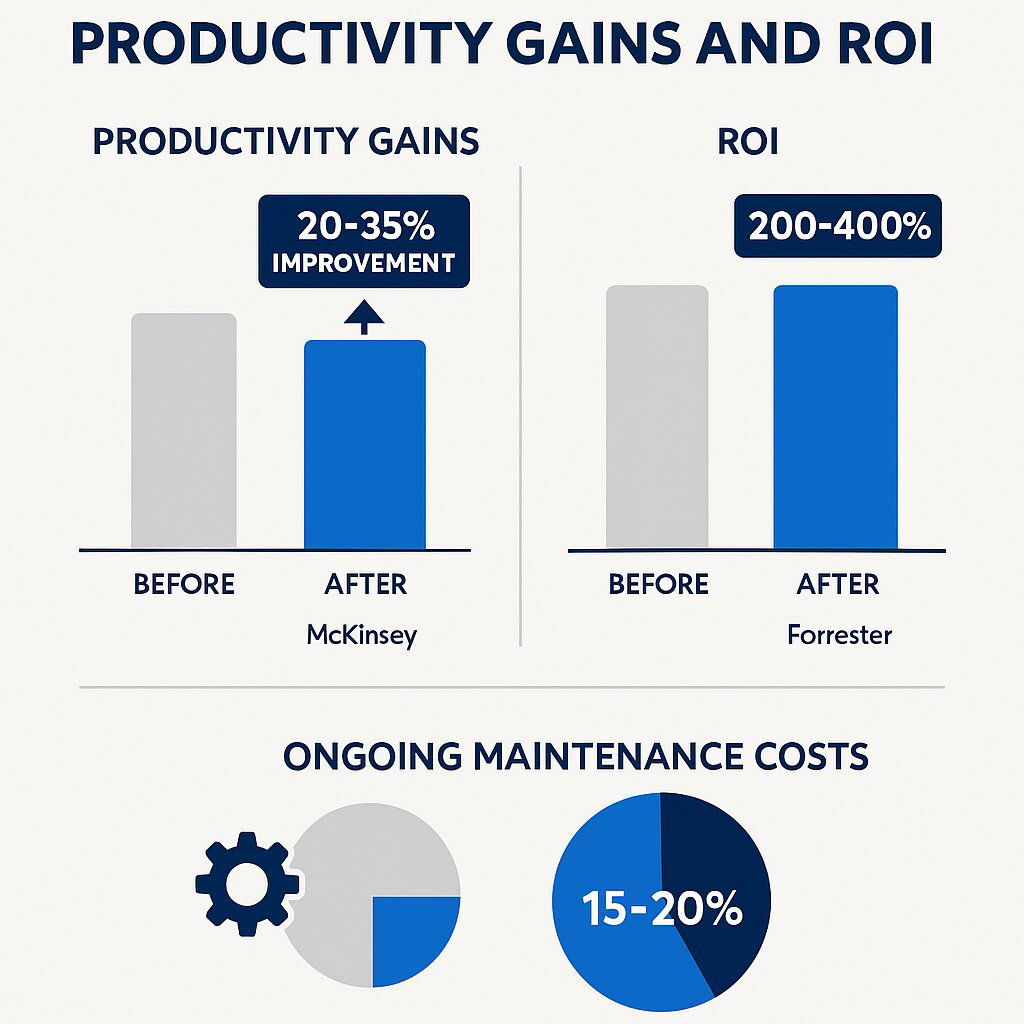
The most immediate and quantifiable benefit of custom software is a huge improvement in operational efficiency. By automating unique, repetitive tasks and streamlining complex internal workflows, custom solutions can unlock significant productivity gains that are simply not possible with generic tools. The financials are clear and well documented:
- Productivity Gains: Research from McKinsey shows that targeted automation through custom software can improve productivity by 20-35% across the departments it touches.
- Impressive Returns: A Forrester Research report found that companies investing in custom software solutions can achieve an average return on investment (ROI) of 200% to over 400% within a few years.
- Predictable Financials: The long term costs are also manageable and predictable. Ongoing maintenance and updates for custom software typically consume 15-20% of the initial development cost annually so you can plan with clarity and accuracy.
Pillar 2: Future-Proof Scalability
As a business grows, its operational needs change. Off-the-shelf software becomes a bottleneck, with restrictive licensing models, limited feature sets, and can’t handle increased data volume or user loads. Custom software is built with scalability at its core. It’s designed to adapt and grow with the business, accommodate new processes, expanding user bases and new features without the friction or cost of generic platforms. This flexibility means the technology remains an enabler of growth, not a constraint on it.
Pillar 3: A Defensible Competitive Advantage
This is the most important strategic outcome. In a competitive market, sustainable advantage comes from being different and better in ways that are hard for competitors to replicate. Custom software is a powerful tool for this. It allows a company to create a Tailored Tech Advantage—a unique set of capabilities that directly supports its core value proposition. This could be:
- A proprietary algorithm that optimizes logistics in a way competitors can’t match.
- A seamless, highly personalized customer portal that drives loyalty.
- An integrated data analytics platform that provides business insights faster and more accurately than any off-the-shelf tool.
When software is perfectly aligned with a company’s business model, it stops being a tool and becomes a weapon. It creates a moat that protects market share and profitability by enabling a level of service, efficiency, or innovation that competitors using generic software can’t achieve. This is why market leaders are increasingly building their own software—they know true leadership is built on unique capabilities, not commoditized tools.
Should We Outsource Software Development? A Data-Driven Analysis
The global market data is clear: outsourcing software development has moved from a niche cost-saving tactic to a mainstream strategic imperative for businesses of all sizes. The decision is no longer if a company should use external expertise but how it can do so most effectively. The world’s largest and most successful companies have overwhelmingly adopted outsourcing as part of their technology strategy.
The scale and momentum of this trend is best illustrated by the numbers. The following table shows the IT outsourcing market and its central role in modern business. IT Outsourcing (2025) Data Point Source Snippet(s) Global IT Outsourcing Market Size ~$662 Billion Projected Market by 2034 ~$1.345 Trillion Software Outsourcing Segment CAGR 11.5% (Fastest Growing) Businesses Globally Outsourcing or Planning To 78% Large Companies (Global 2000) Outsourcing 92% Reported Operational Cost Savings Up to 30%
This data tells a clear story: the market is massive, it’s growing fast (especially in software development) and adoption among market leaders is almost universal. This widespread adoption is driven by four key executive-level benefits.
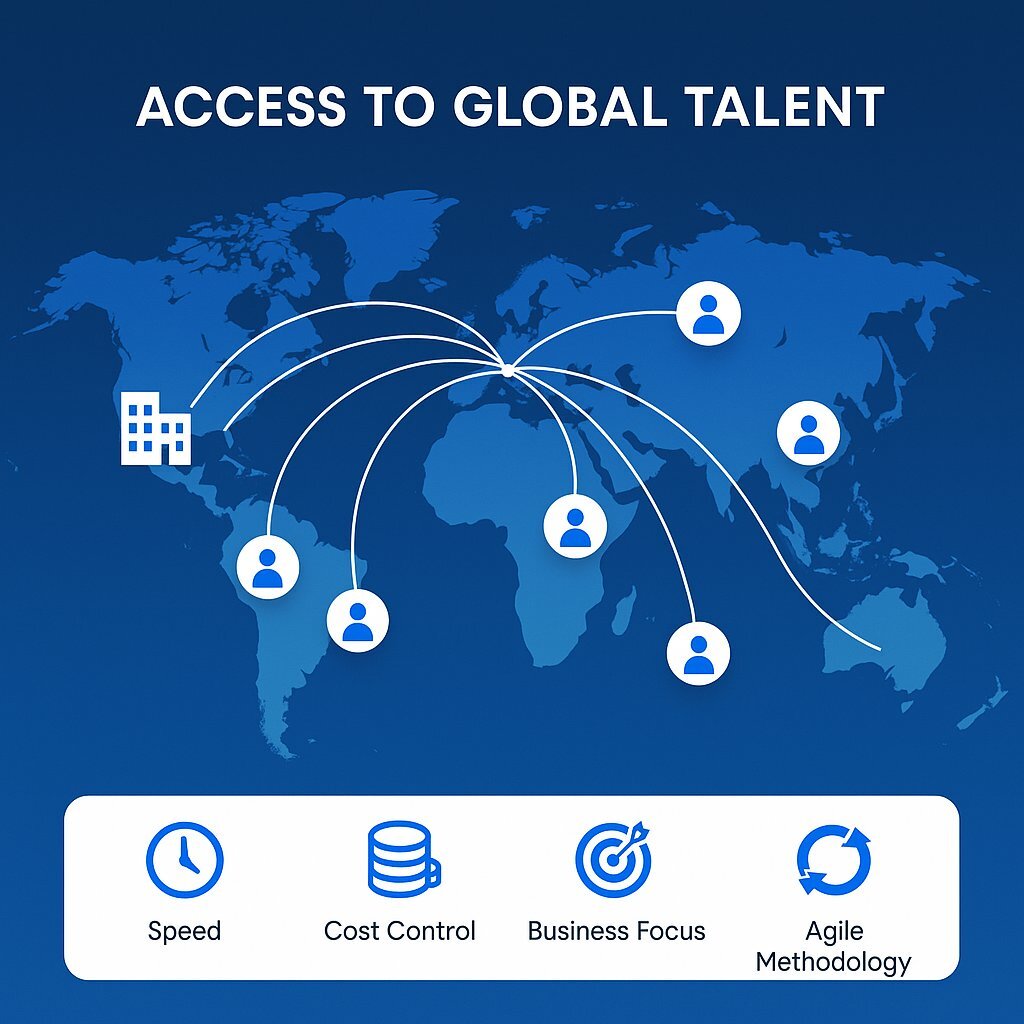
- Access to a Global Talent Pool: One of the biggest challenges any technology leader faces is recruiting and retaining top engineering talent in a hyper-competitive local market. Outsourcing solves this problem instantly by giving access to a global pool of pre-vetted, highly skilled professionals. This is especially important for accessing specialized expertise in high-demand areas like artificial intelligence, cloud computing, and cybersecurity – which may be scarce or too expensive to hire in-house.
- Strategic Cost Optimization: Outsourcing provides a way to have financial control and predictability, a top priority for any CFO. It turns the heavy capital expenditures (CapEx) associated with building an in-house team – salaries, benefits, training, office space, and infrastructure – into a flexible and predictable operating expenditure (OpEx). This model not only yields significant cost savings with some companies reporting up to 70% but also greater budgetary agility. Unparalleled Speed and Agility: In a fast-paced market, speed is a key competitive advantage. An experienced outsourcing partner can assemble a dedicated, high-performing team and start development in a matter of weeks, a process that can take many months when hiring internally. This speed is powered by proven development frameworks. A key enabler of this is Rapid Agile Deployment, an approach that uses Agile methodologies to deliver value incrementally and quickly. Agile development is built on short, iterative cycles (or "sprints") that focus on delivering working software frequently. This allows for continuous feedback, rapid adaptation to change, and a much faster time-to-market which translates to faster ROI and reduced market risk.
- Focus on Core Business: Delegating the complex, non-core function of software development allows the executive leadership team to focus its finite time and resources on what it does best: driving business strategy, customer relationships and sales and marketing. This strategic focus is often the biggest, albeit least measurable, benefit of outsourcing.
The evolution of these drivers shows a fundamental shift in the market. The primary reason for outsourcing is no longer just cost-cutting; it’s a capability acquisition strategy. Companies are not just "renting coders" to save money; they are "buying outcomes" to gain speed, expertise, and a competitive edge. That’s why 92% of the world’s largest companies—which have all the financial resources—still outsource. They are making a strategic decision to partner with specialists who can deliver a fully formed, high-performing team and a proven process that accelerates their most important business goals.
How Do We Choose the Right Development Partner (and Avoid the Pitfalls)?
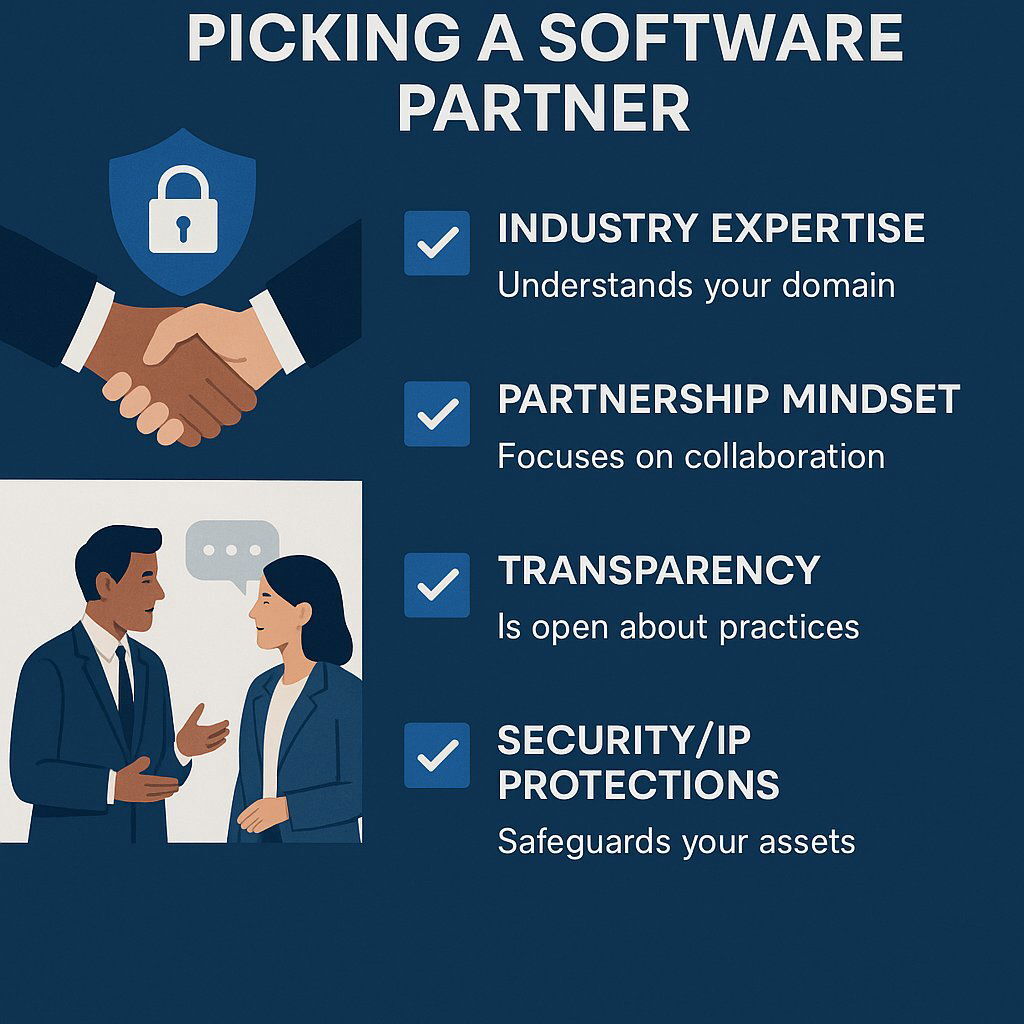
While the strategic case for outsourcing is strong, success hinges on one decision: choosing the right technology partner. A bad partnership can lead to missed deadlines, poor quality, and communication breakdowns. But these are not inherent flaws of outsourcing itself; they are symptoms of a poor selection process. By approaching this decision with the same rigor you would use to hire a key executive, these risks can be mitigated. Before we get into the selection criteria, let’s acknowledge the common concerns around outsourcing: time zone and cultural barriers, quality control challenges, and data security and intellectual property risks. A good partner will have systems and processes to address each of these concerns proactively. The key is to move beyond a vendor checklist and adopt a framework for finding a true strategic partner.
A Framework for Choosing a Strategic Partner
- 1. Evaluate for True Expertise, Not Just Technical Knowledge: Any development company can list programming languages on their website. A true partner has deep expertise in solving the specific business problems of your industry. They know the regulatory landscape, the competitive pressures, and the operational nuances of your market.
- Actionable Advice: Don’t just ask about their technical skills. Ask for case studies and client references from your industry, whether it be FinTech, Healthcare or Real Estate. Present them with a real-world business challenge your company is facing and ask them to outline their strategic approach to solving it. Their response will show the depth of their business acumen.
- 2. Demand a Partnership Mindset, Not a Transactional Relationship: A vendor executes tasks. A partner invests in your long-term success, aligns their goals with yours, and acts as a proactive strategic advisor. This is evident from the very first conversation.
- Actionable Advice: During the first conversations, observe their line of questioning. Do they lead with questions about your budget or do they ask about your long-term business objectives and strategic vision? A true partner is more interested in your business outcomes than your project scope. Look for evidence of long-term client relationships, as this is a strong indicator of a partnership culture.
- 3. Insist on Radical Transparency in Process and Communication: A top-tier development partner has a defined, transparent, and collaborative process. They should be able to explain their workflow—often based on Agile principles—and provide you with the tools and communication cadence to track progress in real time. Actionable Advice: Ask for a detailed walk-through of their project management and communication protocol. What collaboration tools do they use (e.g., Jira, Slack)? How often will formal progress reports be delivered? What is their process for managing changes in project scope? There should be no ambiguity in how the partnership will work day-to-day.
- 4. Inspect Their Security and IP Protections: In a world of increasing cyber threats and data privacy regulations, this is non-negotiable. A top-tier partner will have documented protocols for data security, IP protection and compliance with relevant regulations like GDPR in Europe or HIPAA in the US healthcare sector.
- Actionable Advice: Ask for their security certifications, such as ISO/IEC 27001, which is a global standard for information security management. Request to review the IP, confidentiality and data protection clauses in their Master Services Agreement. These legal documents should state that you retain 100% ownership of all IP created.
Next Steps to Building a Technology Moat

The main argument of this piece is clear: in today’s economy, custom software is the engine of durable competitive advantage, and outsourcing is the most strategic, efficient, and effective way for most businesses to build that engine. The journey from operational commodity to strategic asset is not a technical one but a strategic one. The single most important decision in this journey is choosing a partner who knows your business as well as they know technology.
To turn this into action, consider the following three step plan:
- Find Your Strategic Opportunity: Start not with a technology wish list but with a business-centric analysis. Identify the single biggest operational bottleneck, customer pain point, or competitive opportunity within your organization that a custom software solution could address. This could be streamlining a convoluted sales and production workflow, unifying disparate customer data sources into one source of truth or launching a new digital service to create an additional revenue stream. If you’re looking to streamline early experiments, consider how rapid prototyping and MVPs can help validate your business ideas.
- Model the Business Case: Translate the strategic opportunity into a business case. Using the ROI frameworks above, build a preliminary business case that estimates the productivity gains, tangible cost savings from automation, or new revenue. This critical step turns a conceptual idea into a concrete, data-driven proposal that can be evaluated and championed at the executive level.
- Get an Expert to Create a Strategic Plan: The final step is not to “request a quote.” A quote is a response to a list of features. A strategic plan is a response to a set of business goals. Engage with a potential partner for a strategic consultation. The objective of this initial engagement should be to collaborate on a high-level technology plan that directly maps to your business goals—offering a clear path from your current state to your envisioned future. If artificial intelligence is on your roadmap, explore what it takes to upskill your software engineers for AI success as part of your initiative.
By following this approach, your investment in software product development services will yield not just an application but a powerful and lasting competitive advantage.
Related Posts
- ROI Calculations : Forrester Research: The Total Economic Impact™ of Custom Software Development
- Partner Selection : Harvard Business Review: More Than a Provider: Choosing the Right Tech Partner
- Agile Methodology : Atlassian: The Agile Coach - Your Guide to Agile Methodologies
About Baytech
At Baytech Consulting, we specialize in guiding businesses through this process, helping you build scalable, efficient, and high-performing software that evolves with your needs. Our MVP first approach helps our clients minimize upfront costs and maximize ROI. Ready to take the next step in your software development journey? Contact us today to learn how we can help you achieve your goals with a phased development approach.
About the Author

Bryan Reynolds is an accomplished technology executive with more than 25 years of experience leading innovation in the software industry. As the CEO and founder of Baytech Consulting, he has built a reputation for delivering custom software solutions that help businesses streamline operations, enhance customer experiences, and drive growth.
Bryan’s expertise spans custom software development, cloud infrastructure, artificial intelligence, and strategic business consulting, making him a trusted advisor and thought leader across a wide range of industries.