The Baytech Blog, page 36
Articles 316–324 of 420, newest first. Page 36 of 47.
Every article
Search 420 articles, or browse by topic
Everything we've written since 2019, newest first. Start typing and matching articles appear as you go, or pick a topic.
Try
Articles 316–324 of 420 · page 36 of 47
 DevOps & Automation
· 9 min read
Azure DevOps 2025: Comprehensive Analysis and Comparison with Alternative DevOps Tools
Azure DevOps is a comprehensive, all-in-one DevOps platform by Microsoft that streamlines the entire software development lifecycle, from planning and coding to building, testing, and deploying. It offers integrated services like Azure Boards, Repos, Pipelines, Test Plans, and Artifacts, making it ideal for organizations seeking efficiency, quality, and continuous delivery. Compared to alternatives like GitHub, GitLab, Jira, Jenkins, and CircleCI, Azure DevOps excels in end-to-end traceability, deep Microsoft ecosystem integration, and robust project management, though it may lag behind in community size and cutting-edge open-source features.
Bryan ReynoldsRead DevOps & Automation
· 12 min read
Argo CD Explained: GitOps Deployment for Kubernetes at Scale
Argo CD is an open-source continuous delivery (CD) tool built for Kubernetes that uses a GitOps approach to automate application deployments. It ensures that the live state of applications always matches the desired state stored in Git, providing faster, more reliable, and auditable deployments. Unlike Jenkins, which is primarily a continuous integration (CI) tool and requires complex pipeline scripting, Argo CD is Kubernetes-native, easier to scale, and simpler to manage, particularly for SaaS companies looking to streamline operations and reduce downtime. It is free to use, integrates deeply with Git and Kubernetes, and is widely adopted by major SaaS and enterprise companies like Intuit, Adobe, and Capital One to improve deployment consistency, developer productivity, and operational scalability.
Bryan ReynoldsRead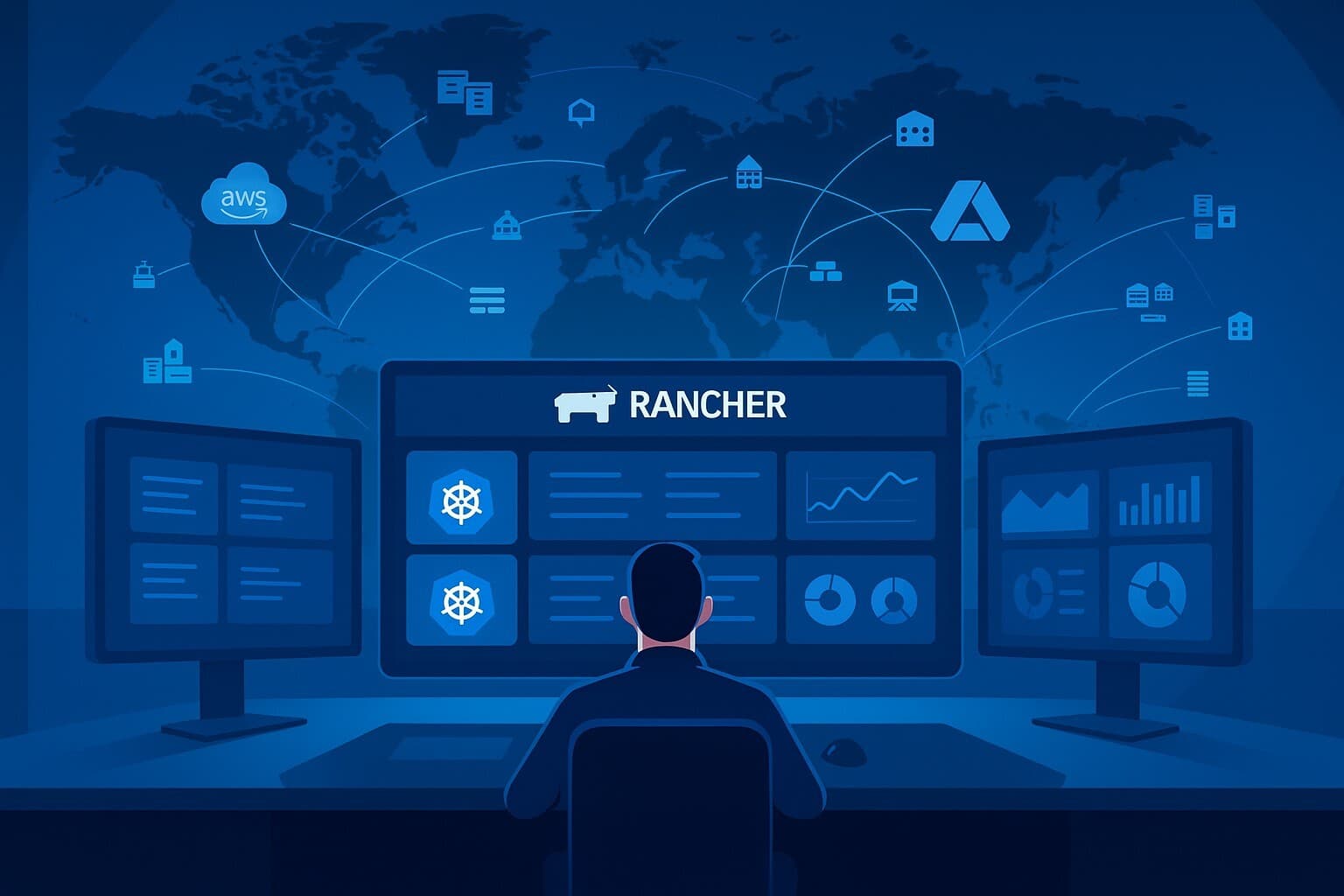 Cloud Cost Management
· 18 min read
Rancher Kubernetes Management Platform Features: Enterprise Kubernetes Management 2025
This report provides an in-depth analysis of Rancher Enterprise Kubernetes Management, highlighting its capabilities in multi-cluster management, hybrid and multi-cloud support, user-friendly operations, and integration with Harvester hyper-converged infrastructure (HCI). It compares Rancher to alternative platforms like Red Hat OpenShift, VMware Tanzu, and managed Kubernetes services from AWS, Azure, and Google Cloud, evaluating their features, pricing models, and total cost of ownership (TCO). The report also explores the financial implications of adopting Rancher, operational and infrastructure costs, and offers strategic recommendations for organizations considering Rancher as their Kubernetes management solution.
Bryan ReynoldsRead Cybersecurity & Risk
· 17 min read
The State of DevOps in 2025: Trends, Adoption, Challenges, and Future Directions
This comprehensive analysis examines the state of DevOps in 2025, highlighting how AI/ML integration, platform engineering, GitOps, and DevSecOps are transforming software development and delivery. With global adoption reaching 80% across industries and market growth projected at 20.1% CAGR, DevOps has become a strategic imperative despite challenges like cultural resistance and skill gaps. The article explores emerging trends including self-healing systems, developer experience optimization, and sustainable practices that will shape the future DevOps landscape beyond 2025, providing organizations with actionable insights to navigate this rapidly evolving ecosystem.
Bryan ReynoldsRead Cloud Cost Management
· 18 min read
Cost Comparison: Salesforce vs. Custom Private Cloud Application for Large Enterprises
This comprehensive analysis compares the total cost of ownership between Salesforce and custom private cloud applications for large enterprises with 500+ users. While Salesforce offers lower initial costs and faster deployment with subscription-based pricing starting at $165-$500 per user monthly, custom solutions require significant upfront investment ($150,000-$500,000+) but potentially lower long-term costs. The five-year TCO for Salesforce ranges from $4.9-$10 million depending on add-ons, while custom solutions range from $1.2-$3.6 million with varying development and maintenance costs. Organizations should consider their customization needs, growth trajectory, data sovereignty requirements, and budget constraints when making this strategic decision.
Bryan ReynoldsRead AI Adoption & Strategy
· 22 min read
Why Most Low-Code Platforms Eventually Face Limitations—and Strategic Considerations for the Future
This comprehensive report examines the rise of low-code development platforms in the digital landscape, analyzing their significant benefits alongside inherent limitations that organizations eventually encounter. While these platforms offer accelerated development and empower non-technical users, they face challenges in scalability, customization, vendor lock-in, integration with legacy systems, security vulnerabilities, and performance bottlenecks as applications grow more complex. The analysis identifies scenarios where low-code approaches fall short, explores future trends including AI integration and enterprise-grade capabilities, compares leading platforms, investigates common reasons for project failure, and provides strategic recommendations for successful implementation. With the global low-code market projected to reach $187 billion by 2030, organizations must carefully navigate these platforms' strengths and limitations through strategic planning, hybrid development approaches, robust governance frameworks, and prioritization of security and scalability to harness their potential while effectively mitigating associated risks.
Bryan ReynoldsRead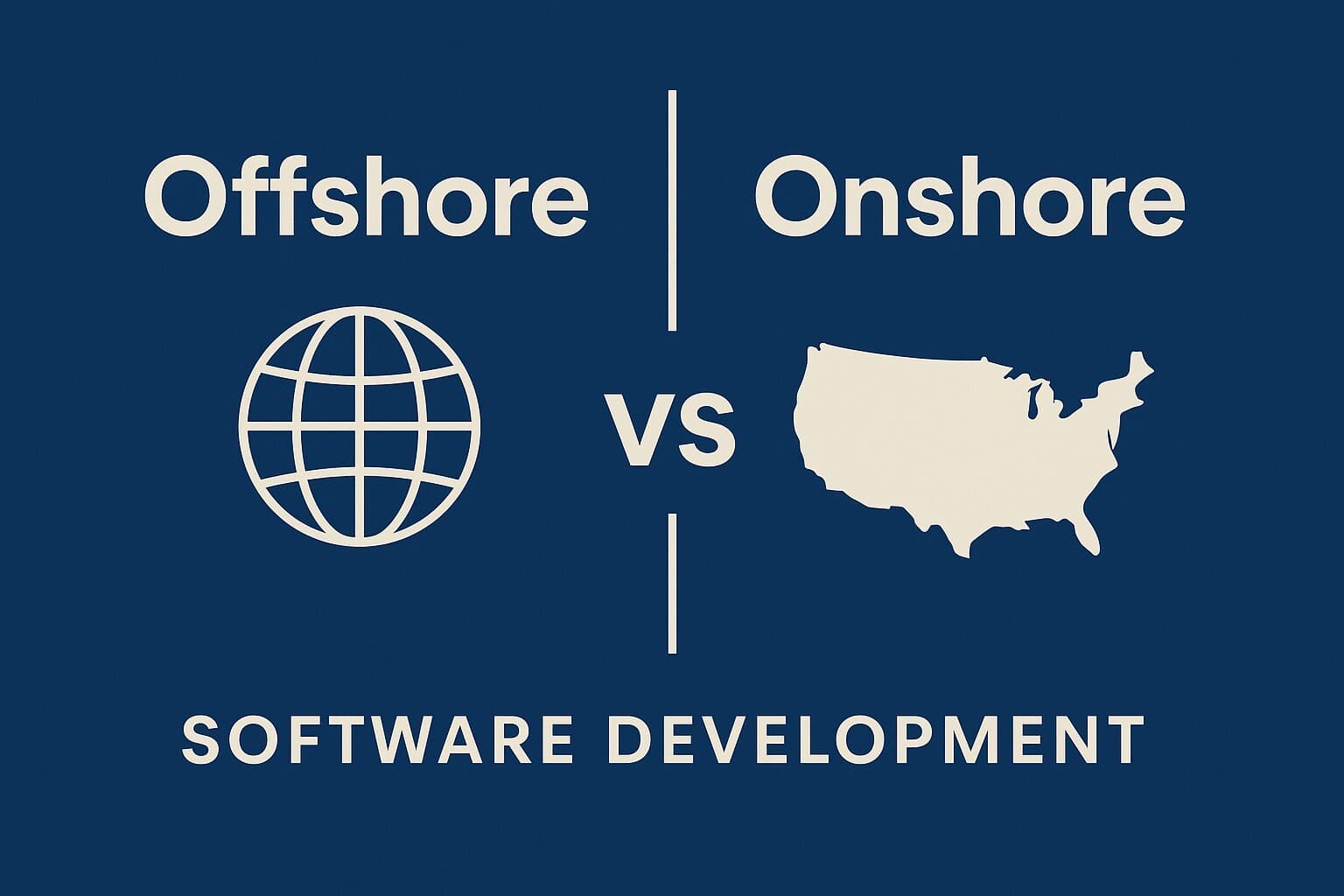 Cloud Cost Management
· 14 min read
Offshore vs. Onshore Software Development: A Comparative Analysis of Costs, Quality, and Strategic Implications
This report provides a comprehensive analysis of the trade-offs between offshore and onshore software development models. Offshore development offers notable cost savings, access to a global talent pool, and scalability, but introduces risks like communication barriers, quality control challenges, and security concerns that can lead to costly rework. Onshore development, while more expensive initially, provides superior communication, greater control, and better alignment with local market needs, minimizing long-term risks and maintenance costs. The report emphasizes that strategic decision-making should prioritize a thorough evaluation of total cost of ownership (TCO), project complexity, risk tolerance, and long-term quality outcomes rather than focusing solely on hourly rates. A balanced, holistic approach is critical to achieving successful, cost-effective software development.
Bryan ReynoldsRead Cloud Cost Management
· 15 min read
Cost-Effectiveness Analysis of Harvester HCI in the Hyperconverged Infrastructure Market
Harvester HCI is an open-source, Kubernetes-based hyperconverged infrastructure solution offering a cost-effective alternative to proprietary platforms like VMware vSAN, Nutanix, Scale Computing, and Azure Stack HCI. Built for bare-metal environments, it integrates virtualization, storage, and networking into a unified platform without licensing fees, significantly reducing total cost of ownership (TCO). Harvester supports standard hardware, offers seamless integration with Rancher for hybrid workloads, and delivers strong scalability and management simplicity. While it may lack some of the advanced features of mature competitors, its open-source foundation, commodity hardware compatibility, and cloud-native design make it an attractive choice for organizations prioritizing cost savings, flexibility, and modernization.
Bryan ReynoldsRead AI Adoption & Strategy
· 15 min read
Hidden Dangers of AI Hallucinations in Financial Services
AI hallucinations—instances where large language models (LLMs) confidently produce false or misleading information—pose serious risks in finance, where factual precision is crucial. This article examines how hallucinations manifest in financial contexts, such as fabricated metrics, regulatory misstatements, and invented stock prices, leading to business risks like misinformed decision-making, compliance violations, financial losses, trust erosion, and litigation. Ethical issues, including privacy breaches, algorithmic bias, and lack of explainability, further complicate AI's role in finance. Practical solutions, such as domain-specific fine-tuning, retrieval-augmented generation (RAG), advanced prompting, guardrails, cross-verification, and continuous monitoring, are critical to minimizing hallucinations and ensuring AI systems operate ethically, accurately, and reliably.
Bryan ReynoldsRead
Company Facts
& Figures


Our Office


Get in Touch
Software is what you depend on to get things done. Baytech is who you depend on for software.