The Baytech Blog, page 34
Articles 298–306 of 406, newest first. Page 34 of 46.
Every article
Search 406 articles, or browse by topic
Everything we've written since 2019, newest first. Start typing and matching articles appear as you go, or pick a topic.
Try
Articles 298–306 of 406 · page 34 of 46
 Custom Application Development
· 17 min read
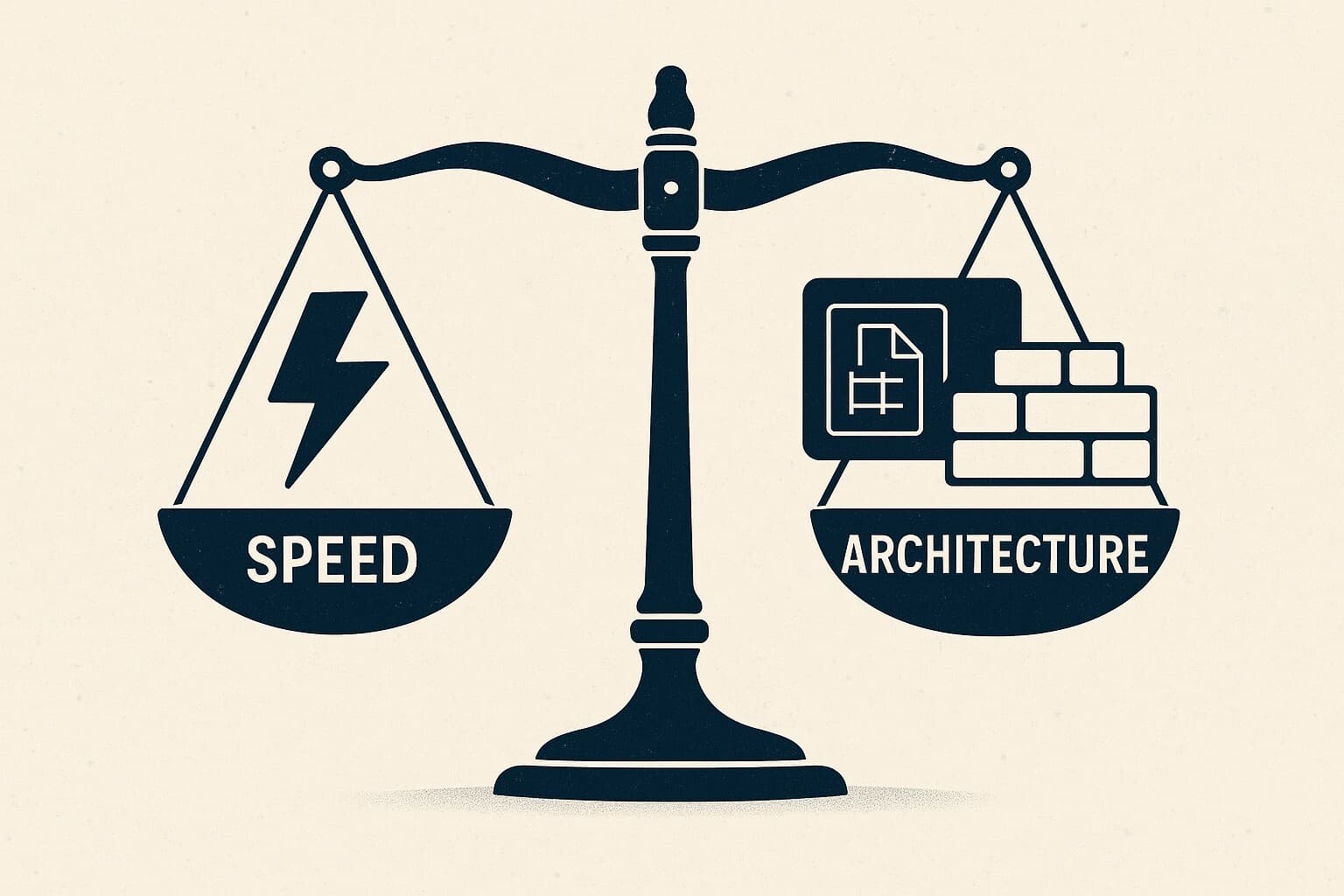
Navigating the Rapids: Balancing Speed and Architecture in Minimum Viable Product Development
This article explores the critical dynamics behind building a successful Minimum Viable Product (MVP), highlighting why many MVPs fail due to an imbalance between speed and architecture. It outlines the strategic importance of validated learning, identifies common pitfalls in execution, and offers actionable frameworks to balance rapid market entry with a scalable technical foundation. Through case studies and practical recommendations, it guides startups in avoiding technical debt traps and over-engineering, helping them launch smarter and build products that truly meet user needs.
Bryan ReynoldsRead Cybersecurity & Risk
· 22 min read
Selecting Your Software Development Partner: A Strategic Guide to Navigating Choices and Avoiding Red Flags in the US and Offshore
Selecting the right software development partner—whether onshore or offshore—is a high-stakes decision with long-term business impact. This report provides a comprehensive guide for navigating the selection process, emphasizing the importance of strategic alignment, process maturity, communication, cultural fit, and intellectual property protection. While US-based firms offer closer collaboration and legal simplicity, offshore companies provide cost efficiency and broader talent access but require stronger oversight and risk management. By focusing on holistic evaluation, rigorous due diligence, and a multi-layered IP protection strategy, businesses can identify a partner that delivers not just code, but sustainable business value.
Bryan ReynoldsRead Cloud Cost Management
· 22 min read
OVHcloud Bare Metal Servers: A Comprehensive Analysis
This comprehensive analysis explores OVHcloud's Bare Metal server offerings, highlighting their competitive pricing, high-performance configurations, and generous unmetered bandwidth. It examines OVHcloud’s value across various server tiers—from budget-friendly to enterprise-grade—while assessing market positioning against hyperscalers like AWS and regional players like Hetzner. The report also covers included features such as Anti-DDoS protection, vRack private networking, and infrastructure automation via Metal Instances. Baytech Consulting leverages OVHcloud as the foundation for its hybrid infrastructure stack, emphasizing cost-effective control through open-source tools like Harvester and Rancher. The analysis concludes with a realistic appraisal of OVHcloud’s strengths, such as compliance certifications and European data sovereignty, balanced against its weaknesses, particularly support responsiveness and past reliability concerns.
Bryan ReynoldsRead Cloud Cost Management
· 22 min read
Sentry.io vs. Competitors: The Complete Guide to Error Monitoring and APM Tools
Sentry.io is a developer-focused application monitoring platform specializing in real-time error tracking and performance insights for web, mobile, and backend applications. It offers a free plan for individual developers and scalable paid plans for teams, with unique flexibility to self-host for cost control at scale. Compared to competitors like Datadog, New Relic, Rollbar, and Bugsnag, Sentry stands out for its rich developer-centric features, strong platform support, and open-source availability. For most small-to-midsize teams, Sentry’s SaaS provides the best balance of ease and cost, while self-hosting becomes financially advantageous at very high volumes.
Bryan ReynoldsRead DevOps & Automation
· 9 min read
Azure DevOps 2025: Comprehensive Analysis and Comparison with Alternative DevOps Tools
Azure DevOps is a comprehensive, all-in-one DevOps platform by Microsoft that streamlines the entire software development lifecycle, from planning and coding to building, testing, and deploying. It offers integrated services like Azure Boards, Repos, Pipelines, Test Plans, and Artifacts, making it ideal for organizations seeking efficiency, quality, and continuous delivery. Compared to alternatives like GitHub, GitLab, Jira, Jenkins, and CircleCI, Azure DevOps excels in end-to-end traceability, deep Microsoft ecosystem integration, and robust project management, though it may lag behind in community size and cutting-edge open-source features.
Bryan ReynoldsRead DevOps & Automation
· 12 min read
Argo CD Explained: GitOps Deployment for Kubernetes at Scale
Argo CD is an open-source continuous delivery (CD) tool built for Kubernetes that uses a GitOps approach to automate application deployments. It ensures that the live state of applications always matches the desired state stored in Git, providing faster, more reliable, and auditable deployments. Unlike Jenkins, which is primarily a continuous integration (CI) tool and requires complex pipeline scripting, Argo CD is Kubernetes-native, easier to scale, and simpler to manage, particularly for SaaS companies looking to streamline operations and reduce downtime. It is free to use, integrates deeply with Git and Kubernetes, and is widely adopted by major SaaS and enterprise companies like Intuit, Adobe, and Capital One to improve deployment consistency, developer productivity, and operational scalability.
Bryan ReynoldsRead Cloud Cost Management
· 18 min read
Rancher Kubernetes Management Platform Features: Enterprise Kubernetes Management 2025
This report provides an in-depth analysis of Rancher Enterprise Kubernetes Management, highlighting its capabilities in multi-cluster management, hybrid and multi-cloud support, user-friendly operations, and integration with Harvester hyper-converged infrastructure (HCI). It compares Rancher to alternative platforms like Red Hat OpenShift, VMware Tanzu, and managed Kubernetes services from AWS, Azure, and Google Cloud, evaluating their features, pricing models, and total cost of ownership (TCO). The report also explores the financial implications of adopting Rancher, operational and infrastructure costs, and offers strategic recommendations for organizations considering Rancher as their Kubernetes management solution.
Bryan ReynoldsRead Cybersecurity & Risk
· 17 min read
The State of DevOps in 2025: Trends, Adoption, Challenges, and Future Directions
This comprehensive analysis examines the state of DevOps in 2025, highlighting how AI/ML integration, platform engineering, GitOps, and DevSecOps are transforming software development and delivery. With global adoption reaching 80% across industries and market growth projected at 20.1% CAGR, DevOps has become a strategic imperative despite challenges like cultural resistance and skill gaps. The article explores emerging trends including self-healing systems, developer experience optimization, and sustainable practices that will shape the future DevOps landscape beyond 2025, providing organizations with actionable insights to navigate this rapidly evolving ecosystem.
Bryan ReynoldsRead Cloud Cost Management
· 18 min read
Cost Comparison: Salesforce vs. Custom Private Cloud Application for Large Enterprises
This comprehensive analysis compares the total cost of ownership between Salesforce and custom private cloud applications for large enterprises with 500+ users. While Salesforce offers lower initial costs and faster deployment with subscription-based pricing starting at $165-$500 per user monthly, custom solutions require significant upfront investment ($150,000-$500,000+) but potentially lower long-term costs. The five-year TCO for Salesforce ranges from $4.9-$10 million depending on add-ons, while custom solutions range from $1.2-$3.6 million with varying development and maintenance costs. Organizations should consider their customization needs, growth trajectory, data sovereignty requirements, and budget constraints when making this strategic decision.
Bryan ReynoldsRead
Company Facts
& Figures


Our Office


Get in Touch
Software is what you depend on to get things done. Baytech is who you depend on for software.